
All Books

As a boutique press, Two Dollar Radio publishes bold works of literary merit, each book, individually and collectively, providing a sonic progression that we believe to be too loud to ignore.
Books are shown in 'newest to oldest' view, which you can change with the Sort option below.
For a preview of each book, click on the "Sneak Peek" tab on each book's page, or check out our Issuu page here to view them all: Two Dollar Radio on Issuu
-
 QUICK VIEW
Distortion (Forthcoming)
QUICK VIEW
Distortion (Forthcoming)
a novel by
Kathryn Bromwich
Coming March 2027
"An exquisite work: darkly gripping and sensuous, a Milgram experiment-esque horror meets Eyes Wide Shut."
—Daisy Lafarge
Hypnotic, disquieting, and surprising, Distortion is a modern gothic tale of seduction and survival.

Distortion (Forthcoming)
a novel by
Kathryn Bromwich
$ 9.99View full product details →$ 10.99"An exquisite work: darkly gripping and sensuous, a Milgram experiment-esque horror meets Eyes Wide Shut."
—Daisy LafargeHypnotic, disquieting, and surprising, Distortion is a modern gothic tale of seduction and survival.
-
 QUICK VIEW
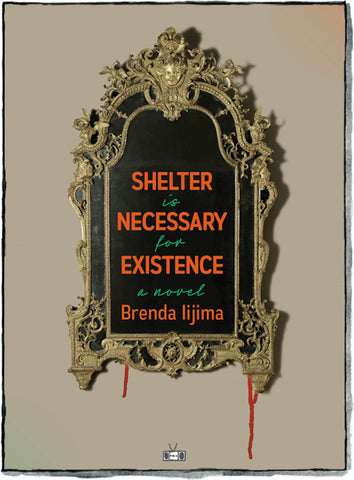
Shelter Is Necessary for Existence (Forthcoming)
QUICK VIEW
Shelter Is Necessary for Existence (Forthcoming)
a novel by
Brenda Iijima
October 2026!
"Iijima is both a poet and a theorist of our frightening yet fascinating contemporary condition.”
—Elvia Wilk, author of Death by Landscape
Unsettling and charged, Shelter Is Necessary for Existence is equal parts psychological thriller and social satire that explores the disquieting qualities of a privileged family’s mundane cultural assumptions.
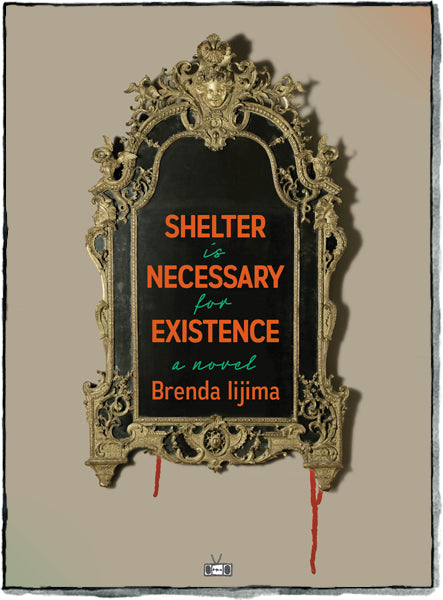
Shelter Is Necessary for Existence (Forthcoming)
a novel by
Brenda Iijima
$ 9.99View full product details →$ 10.99With exacting psychological detail and a trenchant atmosphere, Shelter Is Necessary for Existence is a darkly comic and piercing social critique that examines the troubling territory of awareness, the lengths some go to avoid it, and what must be confronted for change to occur.
With exacting psychological detail and a trenchant atmosphere, Shelter Is Necessary for Existence is a darkly comic and piercing social critique that examines the troubling territory of awareness, the lengths some go to avoid it, and what must be confronted for change to occur.
-
 QUICK VIEW
Acid Green Velvet
QUICK VIEW
Acid Green Velvet
a novel by
Grace Krilanovich
September 2026!
"Meticulously realized and yet brazenly fresh, Krilanovich's latest is a marvel of character and situation. Brilliant!"
—Jeff VanderMeer
The breathtaking and consequential first novel in nearly two decades from the award-winning author of the cult sensation, The Orange Eats Creeps.

Acid Green Velvet
a novel by
Grace Krilanovich
$ 10.99View full product details →In Anzar’s cracked mirror, Californian freakiness meets Victorian preoccupations with the domestic, pollution and filth, haunted houses, fringe societies, living death, spiritualism, vampiric women, and class parasites. Acid Green Velvet is a surreal powder keg of nihilism, fathers and their failures, manifest destiny, and American identity, penned in rapturous prose by the fiercest writer of her generation.
In Anzar’s cracked mirror, Californian freakiness meets Victorian preoccupations with the domestic, pollution and filth, haunted houses, fringe societies, living death, spiritualism, vampiric women, and class parasites. Acid Green Velvet is a surreal powder keg of nihilism, fathers and their failures, manifest destiny, and American identity, penned in rapturous prose by the fiercest writer of her generation.
-
 QUICK VIEW
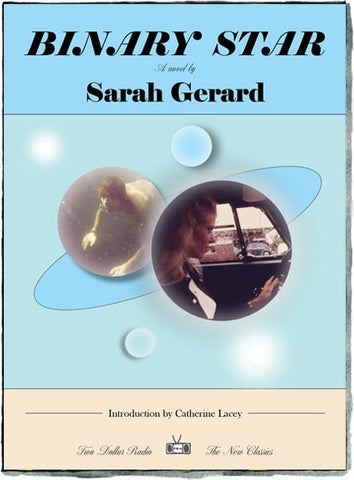
Binary Star
QUICK VIEW
Binary Star
a novel by
Sarah Gerard
L.A. Times Book Prize Finalist
A Best Book of 2015
"Rhythmic, hallucinatory, yet vivid as crystal."
—NPR
An intense, elegiac portrait of young lovers as they battle personal afflictions. Coming Soon!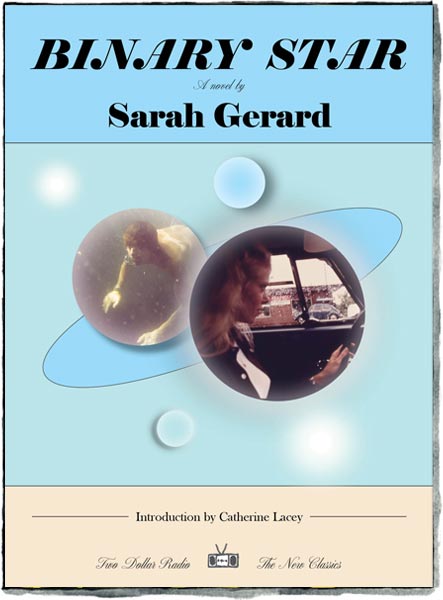
Binary Star
a novel by
Sarah Gerard
$ 9.99View full product details →*Los Angeles Times Book Prize Finalist.
*Best Books of 2015 —NPR,Vanity Fair
*Best Fiction of 2015 —BuzzFeed
*Best Independent Press Books 2015 —Flavorwire
*Favorite Novels 2015 —Largehearted BoyThe language of the stars is the language of the body. Like a star, the anorexic burns fuel that isn't replenished; she is held together by her own gravity.
With luminous, lyrical prose, Binary Star is an impassioned account of a young woman struggling with anorexia and her long-distance, alcoholic boyfriend. On a road-trip circumnavigating the United States, they stumble into a book on veganarchism, and believe they've found a direction.
Binary Star is an intense, fast-moving saga of two young lovers and the culture that keeps them sick (or at least inundated with quick-fix solutions); a society that sells diet pills, sleeping pills, magazines that profile celebrities who lose weight or too much weight or put on weight, and books that pimp diet secrets or recipes for success. -
 QUICK VIEW
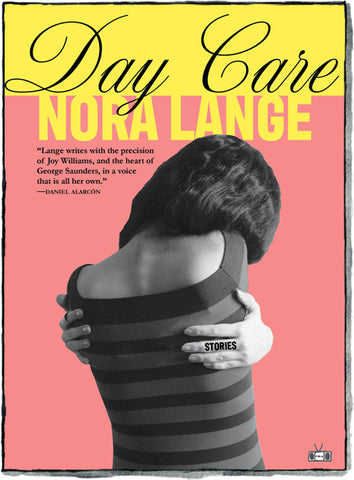
Day Care
QUICK VIEW
Day Care
a story collection by
Nora Lange
April 2026!
"Nora Lange writes with the precision of Joy Williams, and the heart of George Saunders, in a voice that is all her own."
—Daniel Alarcón, author of At Night We Walk in Circles
Hilarious, playful, and savage, Day Care is a biting reflection on American identity, the male gaze, and consumerism that furthers Lange’s budding reputation as a major talent. 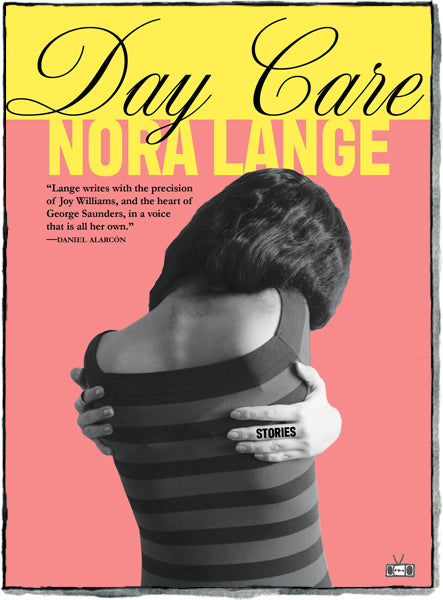
Day Care
a story collection by
Nora Lange
$ 9.99View full product details →$ 10.99From award-winning author Nora Lange comes a refreshing look at the lives of women attempting to rattle carping mothers and wanting men through daytime sex.
Hilarious, playful, and savage, Day Care is a biting reflection on American identity, the male gaze, and consumerism that furthers Lange’s budding reputation as a major talent.
-
 QUICK VIEW
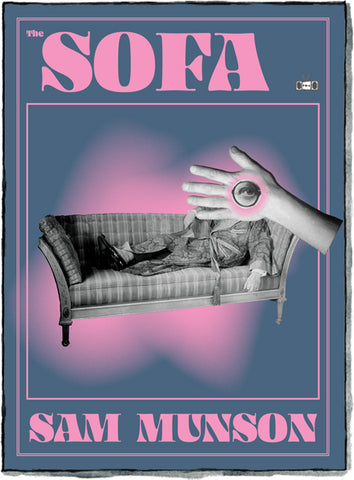
The Sofa
QUICK VIEW
The Sofa
a novel by
Sam Munson
November 2025!
Kafkaesque slow-burn domestic horror from a master of the uncanny.
Munson emerges as a master stylist in this tense, taut work of surreal humor and psychological horror. 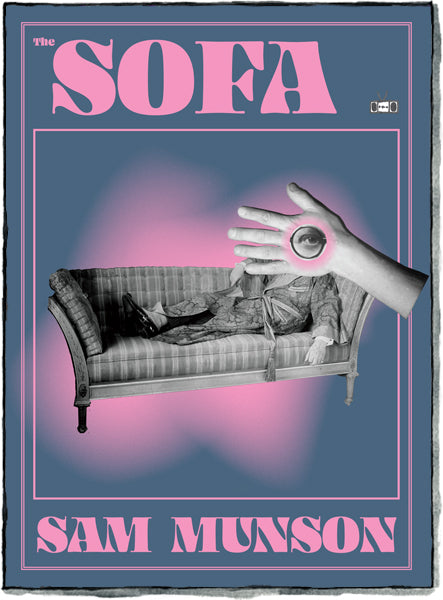
The Sofa
a novel by
Sam Munson
$ 9.99View full product details →$ 10.99Mr. Montessori and his family return home from a trip to the beach to discover that their sofa is different. Once dark and contemporary, it’s now antique, green and yellow, and smelling faintly of damp.
Mr. Montessori and his family return home from a trip to the beach to discover that their sofa is different. Once dark and contemporary, it’s now antique, green and yellow, and smelling faintly of damp.
Its appearance and origins are a mystery. A joke? An inverted theft? A break in the fabric of reality? Yes, the police take the “crime” seriously. But what happens next lies outside their expertise. Strange sounds in the night. A half-bathroom toilet with a mind of its own. Odd, fleeting glimpses of something (or someone) in mirrors. The inexplicable vision of Montessori’s neighbor: He swears he saw a burglar. . . .
-
 QUICK VIEW
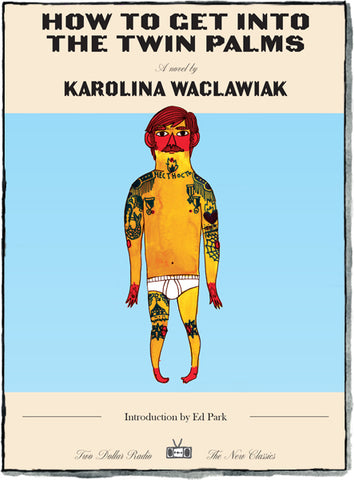
How To Get Into the Twin Palms New Classics Edition
QUICK VIEW
How To Get Into the Twin Palms New Classics Edition
a novel by
Karolina Waclawiak
October 2025!
"Reinvents the
immigration story."
—New York Times Book Review
Get ready to lust after chest hair and pleather. 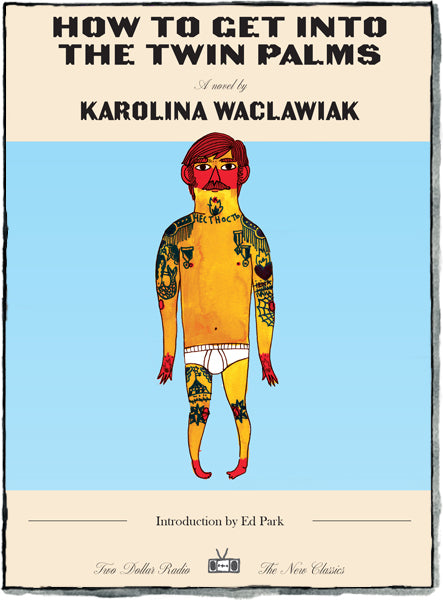
How To Get Into the Twin Palms New Classics Edition
a novel by
Karolina Waclawiak
$ 8.99View full product details →$ 9.99 -
 QUICK VIEW
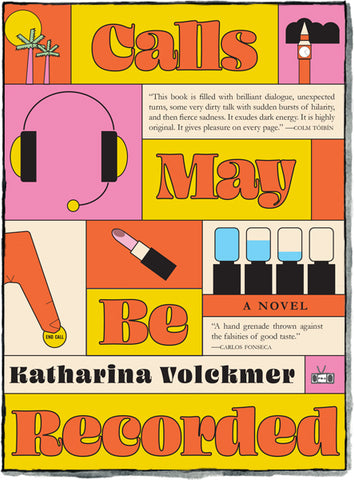
Calls May Be Recorded
QUICK VIEW
Calls May Be Recorded
a novel by
Katharina Volckmer
September 2025!
A ribald and mordantly hilarious workplace satire from an iconoclastic new voice, featuring one of the most charmingly troubled narrators of recent memory.
A ribald and mordantly hilarious workplace satire from an iconoclastic new voice, featuring one of the most charmingly troubled narrators of recent memory. 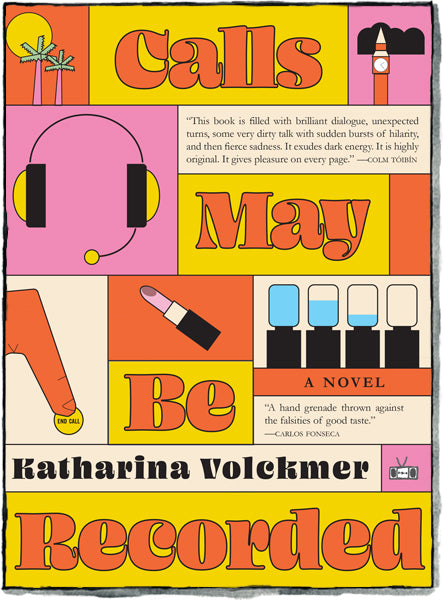
Calls May Be Recorded
a novel by
Katharina Volckmer
$ 8.99View full product details →$ 10.99With remarkable dexterity and an acerbic wit, Katharina Volckmer skewers the corporate workplace and watercooler relationships, culminating in an insightful and powerfully moving portrait of loneliness and human connection.
Jimmie works in a London call center, fielding complaints from dissatisfied travelers. Concerns range from whether compulsive itching will attract sharks in Mykonos, to the queue at the infinity pools in Maldives, to stray hairs on pillows: “the utterings of people at odds with their own hedonism, holidays made unenjoyable by their own expectations.” Today is different, Jimmie’s co-worker Elin warns him. Jimmie is on the chopping block, and his boss, Simon, has followed him into the bathroom during an unauthorized break to request an “urgent” meeting.
-
 QUICK VIEW
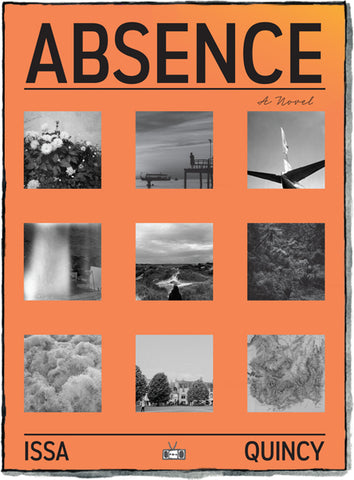
Absence
QUICK VIEW
Absence
a novel by
Issa Quincy
July 2025!
"Through its archive of narratives nestled within narratives, this exquisite novel creates a beguiling soundscape of echoes and murmurs that reverberates in the mind long after the reading. Recalling the novels of W. G. Sebald and the films of Chris Marker, Absence is a mournful and luminous meditation on the work of remembering."
—Christine Lai, author of Landscapes
Haunting and atmospheric, Issa Quincy’s Absence is an indelible nesting doll of human impression and memory.
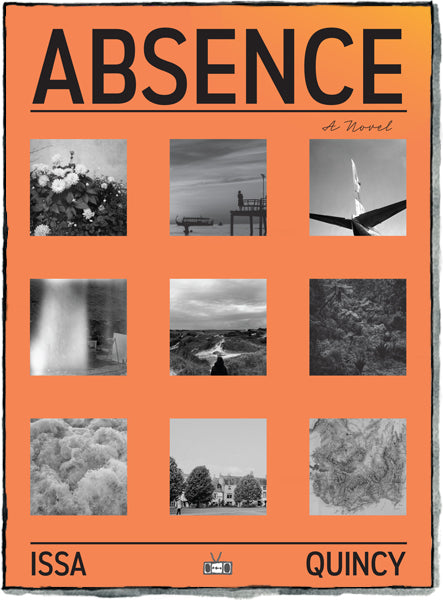
Absence
a novel by
Issa Quincy
$ 9.99View full product details →$ 10.99As we follow characters on their journeys of self-discovery through the jungle of Thailand, as a child in the British countryside, or as an aging doctor on the island of Cyprus, Absence evocatively builds a compassionate symphony of nostalgia, attuned to the drama of everyday and the phantoms that linger with us. Issa Quincy has constructed a transcendent portrait of humanity, deftly illuminating those memories that forever bind us to one another.
As we follow characters on their journeys of self-discovery through the jungle of Thailand, as a child in the British countryside, or as an aging doctor on the island of Cyprus, Absence evocatively builds a compassionate symphony of nostalgia, attuned to the drama of everyday and the phantoms that linger with us. Issa Quincy has constructed a transcendent portrait of humanity, deftly illuminating those memories that forever bind us to one another.
-
 QUICK VIEW
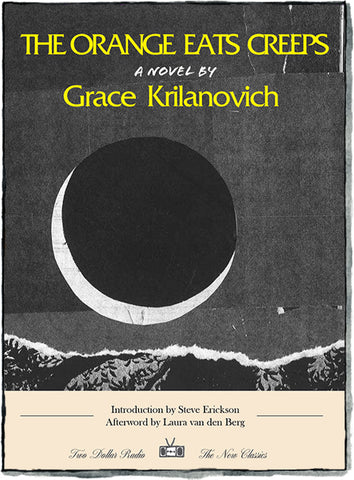
The Orange Eats Creeps New Classics Edition
QUICK VIEW
The Orange Eats Creeps New Classics Edition
a novel by
Grace Krilanovich
A Best Book of 2010
"Krilanovich's work will make you believe that new ways of storytelling are still emerging from the margins." —Rachel Syme, NPR
National Book Foundation '5 Under 35' Award
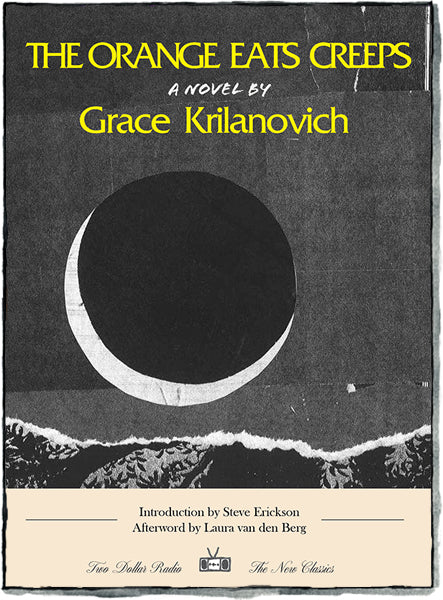
The Orange Eats Creeps New Classics Edition
a novel by
Grace Krilanovich
$ 10.99View full product details →Mary Harron, director of American Psycho, announces plans to adapt The Orange Eat Creeps to film!
*National Book Foundation '5 Under 35' Award
*NPR Best Books of 2010
*The Believer Book Award Finalist
*Indie Bookseller's Choice Awards FinalistA girl with drug-induced ESP and an eerie connection to Patty Reed (a young member of the Donner Party who credited her survival to her relationship with a hidden wooden doll), searches for her disappeared foster sister along “The Highway That Eats People,” stalked by a conflation of Twin Peaks’ “Bob” and the Green River Killer, known as Dactyl.
-
 QUICK VIEW
What We Tried to Bury Grows Here
QUICK VIEW
What We Tried to Bury Grows Here
a novel by
Julian Zabalbeascoa
November 2024!
“What We Tried to Bury Grows Here is a startling book, beautiful and horrific, that navigates the complexities of Basque Country during the Spanish Civil War, in which fascism and communism, regionalism and nationalism, and faith and skepticism do battle across a brilliantly evoked, suffering landscape."
—Phil Klay, author of Redeployment and Missionaries
A masterly crafted and haunting tale of survival, longing, and empathy, set during the Spanish Civil War. 
What We Tried to Bury Grows Here
a novel by
Julian Zabalbeascoa
$ 9.99View full product details →$ 10.99Julian Zabalbeascoa is a fierce and assured new talent, and <i>What We Tried to Bury Grows Here</i> is a remarkable feat of research and imagination, as well as a transcendent literary accomplishment.
In late 1936, eighteen-year-old Isidro Elejalde leaves his Basque village in Northern Spain, spurred to join the fight to preserve his country’s democracy from the insurrectionists by the rousing words of a political essayist. Months earlier, Spanish generals launched a military coup to overthrow Spain’s newly elected left-wing government. They assumed the population would welcome the coup, but throughout the country people like Isidro remained loyal to the ideals of democracy, and the Spanish Civil War began in bloody earnest.
In Bilbao, Mariana raises her two young children while, with her writing, she decries the fascist-backed coup and their German and Italian allies, imploring the world to support democracy. As the Nationalist forces assault the country, Mariana and Isidro’s lives intersect fleetingly, yet in meaningful and lasting ways.
Through a chorus of voices—a female soldier in an all-male battalion, a reluctant conscript recently emigrated from Cuba, a young girl whose parents have abandoned her in order to fight against the fascists, among others—we follow Isidro and Mariana as they struggle to maintain their humanity in a country determined to tear itself apart. -
 QUICK VIEW
Crapalachia New Classics Edition
QUICK VIEW
Crapalachia New Classics Edition
a memoir by
Scott McClanahan
A Best Book of 2013
"[McClanahan] aims to
lasso the moon."
—New York Times Book Review
An endearing and haunting coming-of-age story that announces McClanahan as a resounding talent. 
Crapalachia New Classics Edition
a memoir by
Scott McClanahan
$ 8.99View full product details →$ 10.00*One of the Best Books of 2013 —The Millions, Flavorwire, Dazed & Confused, The L Magazine, Time Out Chicago
"McClanahan's prose is miasmic, dizzying, repetitive. A rushing river of words that reflects the chaos and humanity of the place from which he hails. [McClanahan] aims to lasso the moon... He is not a writer of half-measures. The man has purpose. This is his symphony, every note designed to resonate, to linger."
—Allison Glock, New York Times Book ReviewSynopsis
Crapalachia is a portrait of Scott McClanahan’s formative years, coming of age in rural West Virginia, during a stretch of time where he was deeply influenced by his Grandma Ruby and Uncle Nathan, who suffered from cerebral palsy.
Peopled by colorful characters and their quirky stories, Crapalachia interweaves oral folklore and area history, providing an ambitious and powerful snapshot of overlooked Americana.
Beyond the artistry, there is an optimism, a genuine love for people and the past and memories. Even more, there is a grasp to bridge the disconnect between reader and writer, for McClanahan’s stories to bind us closer to one another. -
 QUICK VIEW
Us Fools
QUICK VIEW
Us Fools
a novel by
Nora Lange
September 2024!
"Past and present seep and bleed in this assured, richly ruminative, darkly funny debut. With exacting lyricism, Nora Lange chronicles the tumult and chaotic love between two unforgettable sisters. Us Fools is a marvel of brutal wit and wild charm—a brilliant, sweeping chronicle of a singular American family."
—Kimberly King Parsons, author of Black Light
A tragicomic, intimate American story of two precocious sisters coming of age during the Midwestern farm crisis of the 1980s. 
Us Fools
a novel by
Nora Lange
$ 9.99View full product details →$ 10.99With her debut novel, Nora Lange has crafted a rambunctious, ambitious, and heart-rending portrait of two idiosyncratic sisters, determined to persevere despite the worst that capitalism and their circumstances has to throw at them.
A tragicomic, intimate American story of two precocious sisters coming of age during the Midwestern farm crisis of the 1980s.
-
 QUICK VIEW
The Only Ones New Classics Edition
QUICK VIEW
The Only Ones New Classics Edition
a novel by
Carola Dibbell
A Best Book of 2015
"Breathtaking. [Dibbell has] delivered a debut novel on par with some of the best speculative fiction of the past 30 years." —NPR
An edgy, intimate portrait of a mother and daughter in a post-pandemic world. 
The Only Ones New Classics Edition
a novel by
Carola Dibbell
$ 8.99View full product details →$ 10.00*10 Favorite Books of the Year (2015) —O, The Oprah Magazine
*Best science fiction and fantasy books of 2015 —The Washington Post
*One of the most anticipated books of 2015 —Dazed & Confused, BuzzFeedInez wanders a post-pandemic world, strangely immune to disease, making her living by volunteering as a test subject. She is hired to provide genetic material to a grief-stricken, affluent mother, who lost all four of her daughters within four short weeks. This experimental genetic work is policed by a hazy network of governmental Ethics committees, and threatened by the Knights of Life, religious zealots who raze the rural farms where much of this experimentation is done.
When the mother backs out at the last minute, Inez is left responsible for the product, which in this case is a baby girl, Ani. Inez must protect Ani, who is a scientific breakthrough, keeping her alive, dodging authorities and religious fanatics, and trying to provide Ani with the chilldhood tha Inez never had, which means a stable home and an education.
With a stylish voice, The Only Ones is a time-old story, tender and iconic, about how much we love our children, however they come, as well as a sly commentary on class, politics, and the complexities of reproductive technology.
-
 QUICK VIEW
Pages of Mourning
QUICK VIEW
Pages of Mourning
a novel by
Diego Gerard Morrison
May 2024!
"Very funny and very sad and very, very smart. Unafraid to make his fiction work on and around questions of unambiguous gravity, Morrison never forgets the importance, indeed the power, in the endeavor of play."
—Laird Hunt, author of Zorrie
Pages of Mourning is a stunning achievement, a pioneering and inventive novel that confronts family history, creativity, Magical Realism, and the impact of violence from Mexico’s drug war, by a magnificent new talent in Diego Gerard Morrison.
Pages of Mourning
a novel by
Diego Gerard Morrison
$ 9.99View full product details →$ 10.99A daring, captivating, darkly funny novel that grapples with uncertainty and loss in a land of violence and superstition, while questioning whether Magical Realism as a genre is capable of confronting the brutal dissonance of a country that awaits the return of the missing while not wholly acknowledging their death.
Pages of Mourning is a stunning achievement, a pioneering and inventive novel that confronts family history, creativity, Magical Realism, and the impact of violence from Mexico’s drug war, by a magnificent new talent in Diego Gerard Morrison.
-
 QUICK VIEW
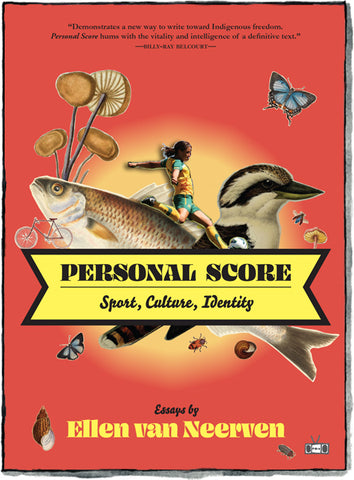
Personal Score
QUICK VIEW
Personal Score
a collection of essays by
Ellen van Neerven
April 2024!
"Demonstrates a new way to write toward Indigenous freedom. Personal Score hums with the vitality and intelligence of a definitive text."
—Billy-Ray Belcourt
Fierce, original, and also abundantly tender, Personal Score is a ground-breaking book that demonstrates van Neerven’s unrivalled talent and courage.
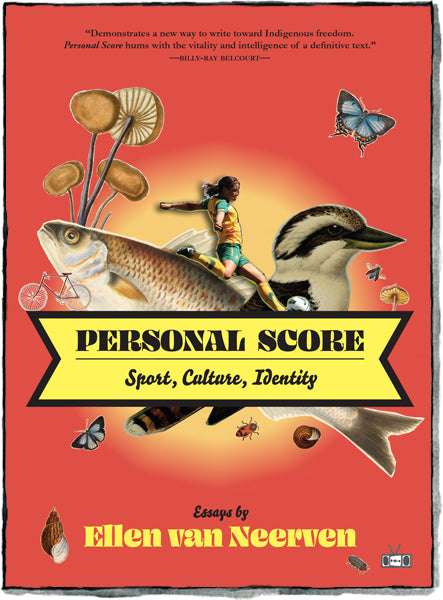
Personal Score
a collection of essays by
Ellen van Neerven
$ 9.99View full product details →$ 10.99Fierce, original, and also abundantly tender, Personal Score is a ground-breaking book that demonstrates van Neerven’s unrivalled talent and courage.
Fierce, original, and also abundantly tender, Personal Score is a ground-breaking book that demonstrates van Neerven’s unrivalled talent and courage.
-
 QUICK VIEW
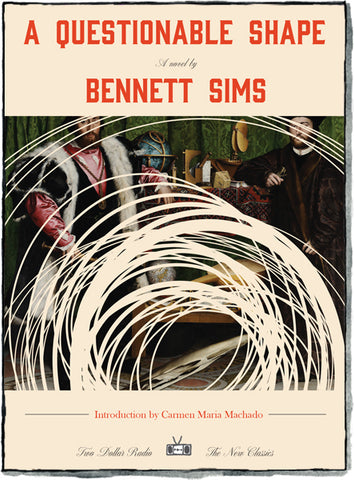
A Questionable Shape New Classics Edition
QUICK VIEW
A Questionable Shape New Classics Edition
a novel by
Bennett Sims
A Best Book of 2013
"[A Questionable Shape] is more than just a novel. It is literature. It is life."
Winner: Bard Fiction Prize
The Believer Book Award Finalist
—Susan Hazen-Hammond, The Millions
A calculated postmodern zombie novel by one of America's brightest literary talents.
The Two Dollar Radio - The New Classics edition features an original introduction by Carmen Maria Machado.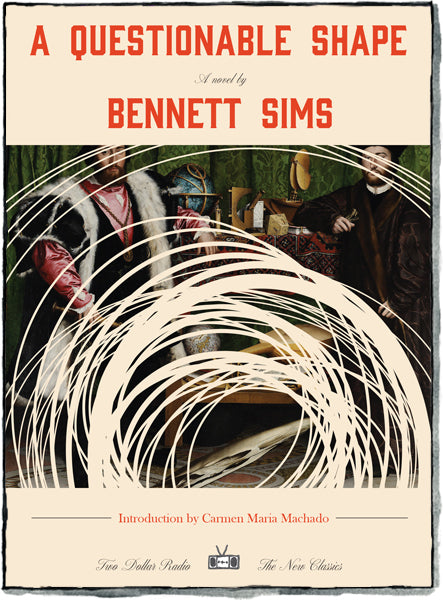
A Questionable Shape New Classics Edition
a novel by
Bennett Sims
$ 8.99View full product details →$ 9.99*Winner of the Rome Prize for Literature 2018-19
*Bard Fiction Prize 2014
*The Believer Book Award Finalist
*One of the Best Books of 2013 —Complex Magazine, Book Riot, Slate, The L Magazine, NPR's 'On Point', SalonMazoch discovers an unreturned movie envelope, smashed windows, and a pool of blood in his father’s house: the man has gone missing. So he creates a list of his father’s haunts and asks Vermaelen to help track him down.
However, hurricane season looms over Baton Rouge, threatening to wipe out any undead not already contained and eliminate all hope of ever finding Mazoch’s father.
Bennett Sims turns typical zombie fare on its head to deliver a wise and philosophical rumination on the nature of memory and loss.
-
 QUICK VIEW
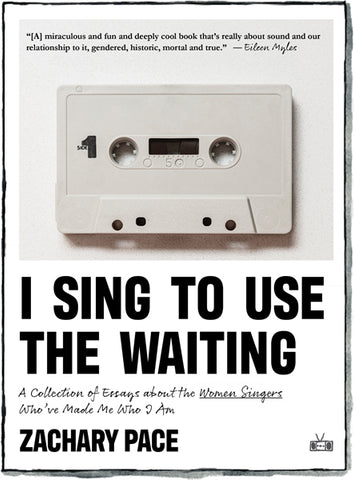
I Sing to Use the Waiting
QUICK VIEW
I Sing to Use the Waiting
a collection of essays by
Zachary Pace
January 2024!
"These essays span much more than women singers... How beautiful for a book’s form to echo what’s at the heart of this collection: The intersection of pop culture, social issues, and personal experience make up Pace’s claiming of their voice."
—Rachel León, Split Lip Magazine
With remarkable grace, candor, and a poet’s ear for prose, Zachary Pace recounts the women singers — from Cat Power to Madonna, Kim Gordon to Rihanna — who shaped them as a young person coming-of-age in rural New York, first discovering their own queer voice.
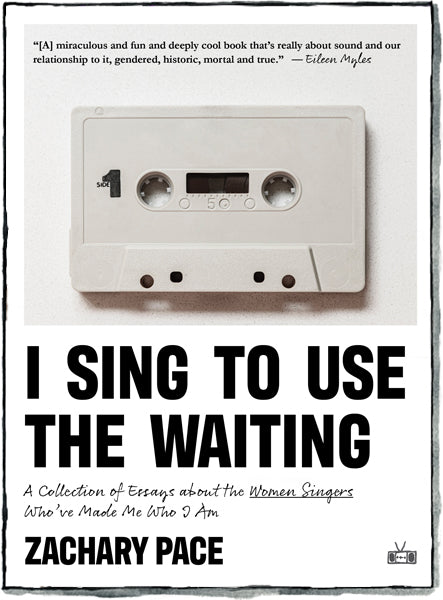
I Sing to Use the Waiting
a collection of essays by
Zachary Pace
$ 9.99View full product details →$ 10.99With remarkable grace, candor, and a poet’s ear for prose, Zachary Pace recounts the women singers — from Cat Power to Madonna, Kim Gordon to Rihanna — who shaped them as a young person coming-of-age in rural New York, first discovering their own queer voice.
With remarkable grace, candor, and a poet’s ear for prose, Zachary Pace recounts the women singers — from Cat Power to Madonna, Kim Gordon to Rihanna — who shaped them as a young person coming-of-age in rural New York, first discovering their own queer voice.
-
 QUICK VIEW
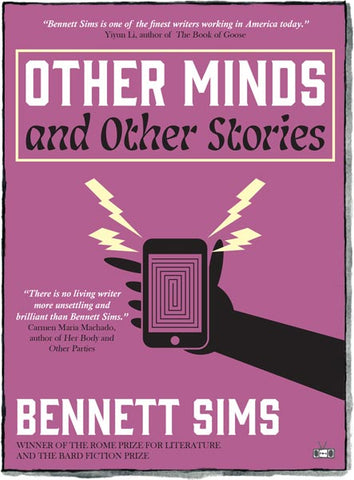
Other Minds and Other Stories
QUICK VIEW
Other Minds and Other Stories
a collection of stories by
Bennett Sims
November 2023!
“[Sims is] kind of like if Alfred Hitchcock and Brian Evenson raised a baby with David Foster Wallace and Nicholson Baker. Sims should be a household name in horror.”
—Carmen Maria Machado, LitHub
From the award-winning author of A Questionable Shape and White Dialogues, a brilliant, anxious, and hilarious new collection. 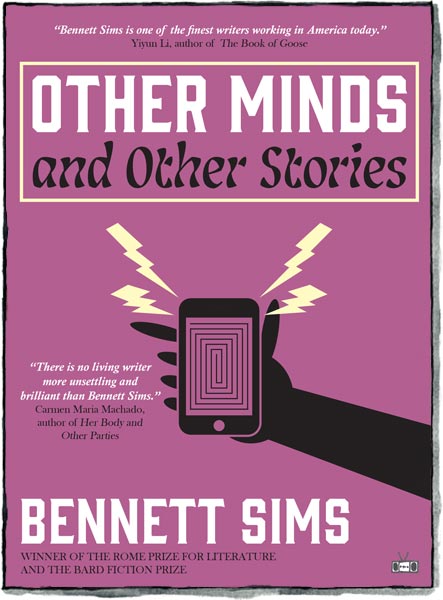
Other Minds and Other Stories
a collection of stories by
Bennett Sims
$ 8.99View full product details →$ 9.99From the award-winning author of A Questionable Shape and White Dialogues, a brilliant, anxious, and hilarious new collection.
A man lends his phone to a stranger in the mall, setting off an uncanny series of Unknown calls that come to haunt his relationship with jealousy and dread. A well-meaning locavore tries to butcher his backyard chickens humanely, only to find himself absorbed into the absurd violence of the pecking order. A student applying for a philosophy fellowship struggles to project himself into the thoughts of his hypothetical judges, becoming increasingly possessed and overpowered by the problem of other minds. And in “The Postcard,” a private detective is hired to investigate a posthumous message that a widower has seemingly received from his dead wife, leading him into a foggy landscape of lost memories, shifting identities, and strange doublings.
Cerebral and eerie, captivating and profound, these thirteen stories expertly guide us through the paranoia and obsession of everyday horrors, not least the horrors of overthinking what other people might be thinking. With all of Sims’s trademark virtuosity, innovation, and wit, Other Minds and Other Stories continues to expand the possibilities of contemporary fiction. -
 QUICK VIEW
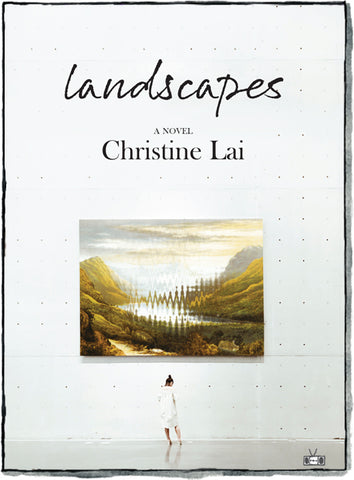
Landscapes
QUICK VIEW
Landscapes
a novel by
Christine Lai
A Best Book of 2023
"A rich meditation on the burden of remembrance, the ruins of the past, and the ruins that climate crisis will soon bring us, Landscapes is a tightly woven debut that travels easily between epistles, point of view shifts, and art criticism... As much as Landscapes is about destruction and decay, it is equally about picking up the ruins and rebuilding."
—Christina Wood, Full Stop
Recalling the works of Rachel Cusk and Kazuo Ishiguro, Landscapes is an evocative reinvention of the pastoral and the country house novel for our age of catastrophe, and announces the arrival of an extraordinarily gifted new writer.
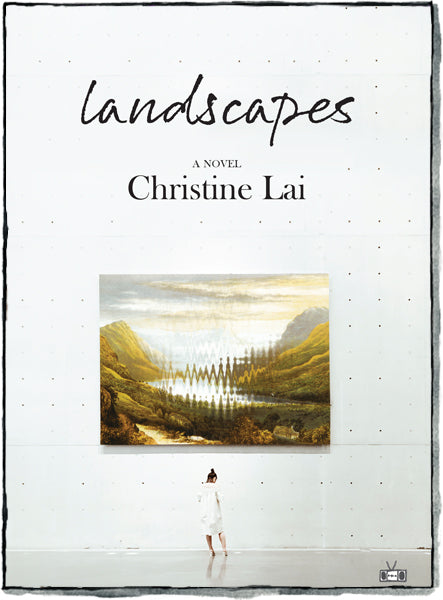
Landscapes
a novel by
Christine Lai
$ 9.99View full product details →$ 10.99An entrancing and prismatic debut novel by Christine Lai, set in a near future fraught with ecological collapse, Landscapes brilliantly explores memory, empathy, preservation, and art as an instrument for recollection and renewal.
Recalling the works of Rachel Cusk and Kazuo Ishiguro, Landscapes is an evocative reinvention of the pastoral and the country house novel for our age of catastrophe, and announces the arrival of an extraordinarily gifted new writer.
-
 QUICK VIEW
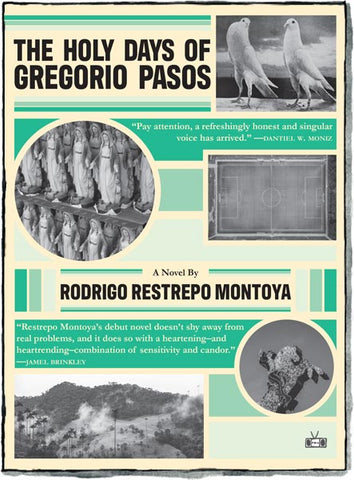
The Holy Days of Gregorio Pasos
QUICK VIEW
The Holy Days of Gregorio Pasos
a novel by
Rodrigo Restrepo Montoya
"There’s a warmth and solemnity to Gregorio’s voice, as he reflects on death and strain, and the almost inarticulable woe of being an immigrant in the States post-2016. Restrepo Montoya, with poignancy, precision, and subtle force, explores the choices that lead us to the places we end up, and what we carry with us in memory and in action."
—Nina MacLaughlin, Boston Globe
Entrancing and sentimental, told with wit and sharp insight, The Holy Days of Gregorio Pasos examines the joys and traumas of the Latinx American experience through the lens of a young man awakening to the nuances of identity, love, colonization, and home.
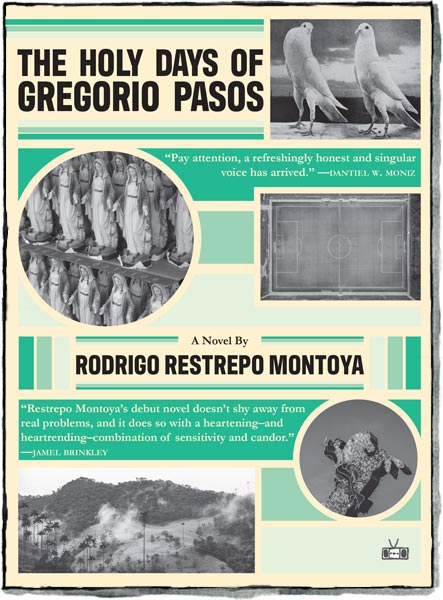
The Holy Days of Gregorio Pasos
a novel by
Rodrigo Restrepo Montoya
$ 9.99View full product details →$ 10.99"Prescient and timeless, dealing with the inseparability of life and decay, this story, through it all, allowed me to sit deeply with love, family, and forgiveness. Pay attention, a refreshingly honest and singular voice has arrived."
—Dantiel W. Moniz, author of Milk Blood HeatEntrancing and sentimental, told with wit and sharp insight, The Holy Days of Gregorio Pasos examines the joys and traumas of the Latinx American experience through the lens of a young man awakening to the nuances of identity, love, colonization, and home.
-
 QUICK VIEW
At the Edge of the Woods
QUICK VIEW
At the Edge of the Woods
a novel by
Kathryn Bromwich
A Best Book of 2023
"An accomplished, unsettling debut... of what it means to inhabit a female body but to reject femininity, and to feel a connection with the natural world that embodies both awe and terror. In this, its themes could not be more timely."
—Stephanie Merritt,
The Guardian
With assurance and remarkable dexterity, Kathryn Bromwich’s masterful debut novel is a rich, gorgeously descriptive account of a woman hiding from old ghosts and new in the Italian Alps, while rekindling her own sense of self through nature.

At the Edge of the Woods
a novel by
Kathryn Bromwich
$ 9.99View full product details →$ 10.99"Bromwich infects the senses with dread and wicked insight from the first page to the last—this is a stunning experience not to be missed."
—Maryse Meijer, author of The Seventh MansionWith assurance and remarkable dexterity, Kathryn Bromwich’s masterful debut novel is a rich, gorgeously descriptive account of a woman hiding from old ghosts and new in the Italian Alps, while rekindling her own sense of self through nature.
-
 QUICK VIEW
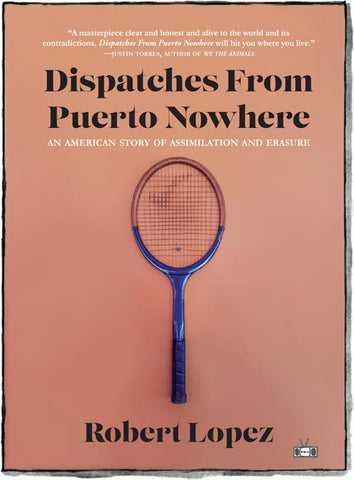
Dispatches From Puerto Nowhere
QUICK VIEW
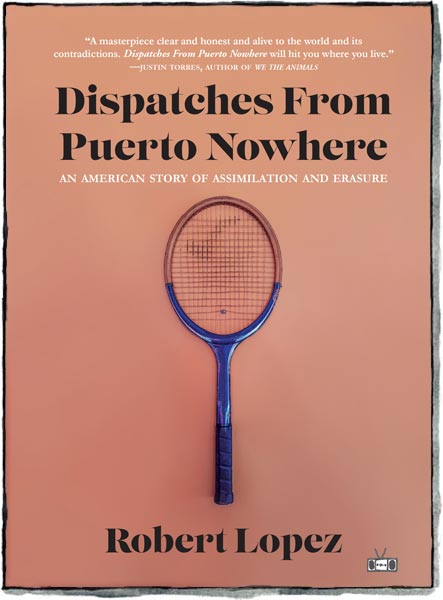
Dispatches From Puerto Nowhere
a memoir by
Robert Lopez
A Best Book of 2023
"Original and fearless... This is a sharply written, incisive, and extremely engaging meditation on assimilation that will strike a painful chord with many who have suffered from the same erasure of their culture in this country."
—Daniel A. Olivas, Latino Book Review
Through family recollection, the constant banter volleyed across nets within Brooklyn’s diverse tennis community, as well as an imagined fabulist history drawn from his grandfather’s remembered traits, Robert Lopez paints a compassionate portrait of family that attempts to bridge the past to the present, and re-claim a heritage threatened by assimilation and erasure.
Dispatches From Puerto Nowhere
a memoir by
Robert Lopez
$ 8.99View full product details →$ 9.99"A masterpiece clear and honest and alive to the world and its contradictions. Dispatches from Puerto Nowhere will hit you where you live."
—Justin Torres, author of We the AnimalsRobert Lopez’s grandfather Sixto was born in Mayaguez, Puerto Rico, in 1904, immigrating to the United States in the 1920s, where he lived in a racially proportioned apartment complex in East New York, Brooklyn, until his death in 1987. The family’s efforts to assimilate within their new homeland led to the near complete erasure of their heritage, culture, and language within two generations.
-
 QUICK VIEW
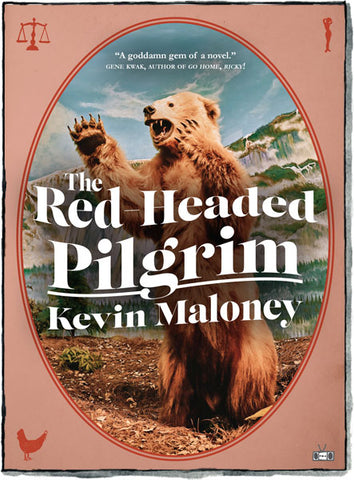
The Red-Headed Pilgrim
QUICK VIEW
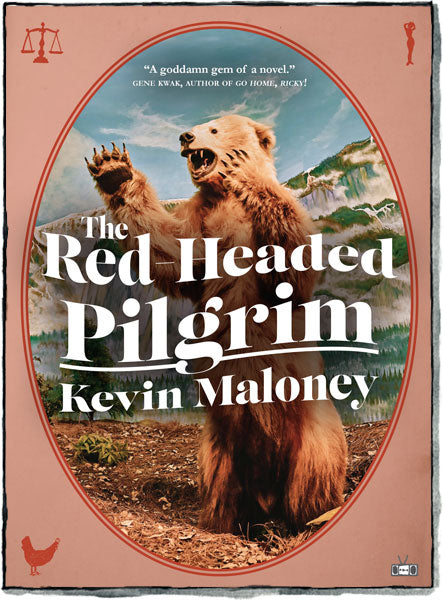
The Red-Headed Pilgrim
a novel by
Kevin Maloney
A Best Book of 2023
"Somewhere between the hysterical realism of Zadie Smith and the sexy, witty misfits of a Tom Robbins novel."
—Brock Kingsley, Chicago Review of Books
Provocative, poignant, and resoundingly hilarious, The Red-Headed Pilgrim is the tragicomic tale of an anxious red-head and his sordid pursuit of enlightenment and pleasure (not necessarily in that order).
The Red-Headed Pilgrim
a novel by
Kevin Maloney
$ 8.99View full product details →$ 9.99"The Red-Headed Pilgrim is a revelation that achieves starry dynamo-level energy from the jump. Maloney's prose is sharp and vivid, full of trippy precision, and his story is funny, wild, painful and wise."
—Sam Lipsyte, author of Hark and The AskThe Red-Headed Pilgrim is an irresistible novel of misadventure and new beginnings, of wanderlust and maybe bad decisions, of parenthood and divorce, and of the heartfelt truths we unearth when we least expect it.
-
 QUICK VIEW
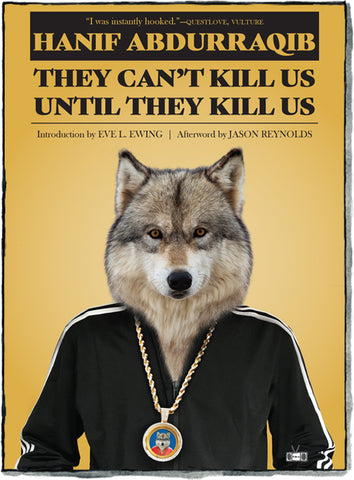
They Can't Kill Us Until They Kill Us
QUICK VIEW
They Can't Kill Us Until They Kill Us
a collection of essays by
Hanif Abdurraqib
Hardcover: Nov 2022!
A Best Book of 2017
"Funny, painful, precise, desperate, and loving throughout. Not a day has sounded the same since I read him."
—Greil Marcus, Village Voice
In this collection of essays, Hanif Abdurraqib, acclaimed poet and cultural critic, grapples with a storm cloud of confounding emotions with prose that is immediate, personal, poetic, sometimes funny and always deeply touching. 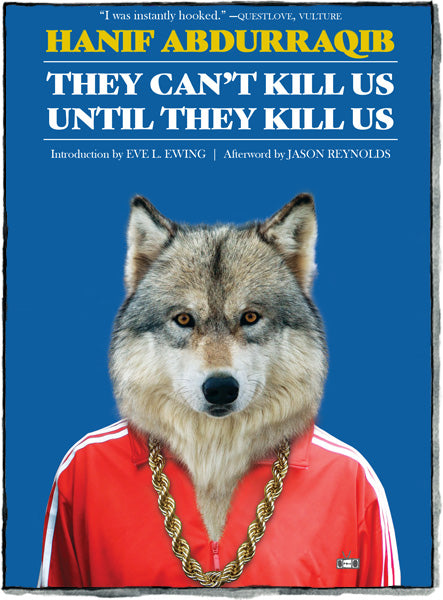
They Can't Kill Us Until They Kill Us
a collection of essays by
Hanif Abdurraqib
$ 8.99View full product details →$ 9.99*Best Books of 2017 —NPR, Buzzfeed, Paste Magazine, Esquire, Chicago Tribune, Vol. 1 Brooklyn, CBC, Stereogum, National Post, Entropy, Heavy, Book Riot, Chicago Review of Books, The Los Angeles Review, Michigan Daily
*American Booksellers Association (ABA) 'December 2017 Indie Next List Great Reads'
*Midwest Indie BestsellerIn an age of confusion, fear, and loss, Hanif Abdurraqib's is a voice that matters. Whether he's attending a Bruce Springsteen concert the day after visiting Michael Brown's grave, or discussing public displays of affection at a Carly Rae Jepsen show, he writes with a poignancy and magnetism that resonates profoundly. In the wake of the nightclub attacks in Paris, he recalls how he sought refuge as a teenager in music, at shows, and wonders whether the next generation of young Muslims will not be afforded that opportunity now. While discussing the everyday threat to the lives of black Americans, Abdurraqib recounts the first time he was ordered to the ground by police officers: for attempting to enter his own car. In essays that have been published by the New York Times, MTV, and Pitchfork, among others—along with original, previously unreleased essays—Abdurraqib uses music and culture as a lens through which to view our world, so that we might better understand ourselves, and in so doing proves himself a bellwether for our times.
-
 QUICK VIEW
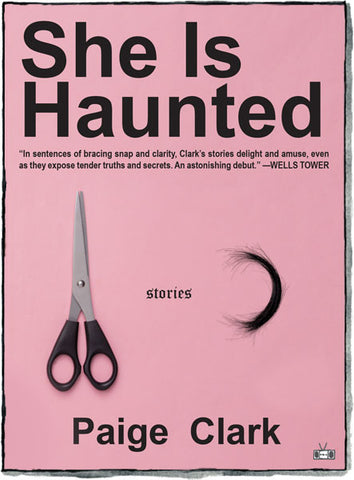
She Is Haunted
QUICK VIEW
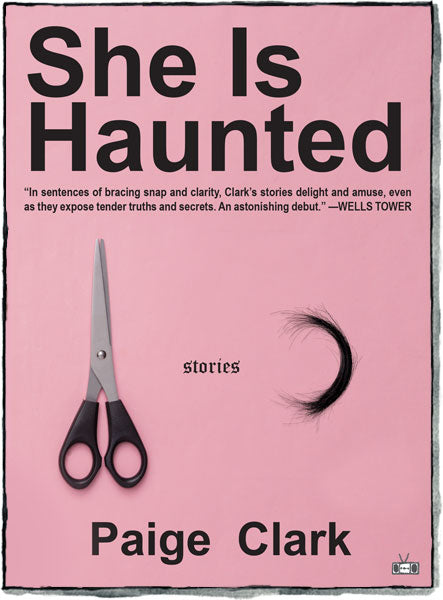
She Is Haunted
a collection of stories by
Paige Clark
Readings Prize for New Australian Fiction, Shortlist
2022 Stella Prize, Longlist"In turns devastating and hilarious, Clark’s exceptional debut collection cuts right to the emotional core of its characters and their conflicts in stories that examine Asian identity, familial relationships, climate anxiety, and gender with an astonishing sense of nuance and clarity."
—Publishers Weekly, starred
With an unforgettable voice and exuberant wit, She Is Haunted is a masterful debut exploring issues of identity, connection, and loss, told with remarkable grace and assurance by Chinese/American/Australian author, Paige Clark.
She Is Haunted
a collection of stories by
Paige Clark
$ 8.99View full product details →$ 9.99"She Is Haunted is electrically original in both prose style and energy. Fans of inventive fiction such as Elizabeth Tan’s recent Readings Prize-winning Smart Ovens for Lonely People or Carmen Maria Machado’s Her Body and Other Parties will find much to admire about She Is Haunted, but this collection will also resonate with anyone drawn to stories of identity and connection, especially female friendships and mother-daughter relationships. An absolute pleasure to read."
—Stella Charls, bookseller at Readings CarltonA ballerina nurses an injured leg and struggles to learn Cantonese while her husband dances on an international tour of Don Quixote with a new female lead; a mother cuts her daughter’s hair because her own hair begins falling out; a woman undergoes brain surgery in order to live more comfortably in extreme temperatures; a woman attempts to physically transform into her dead husband so that she does not have to grieve.
-
 QUICK VIEW
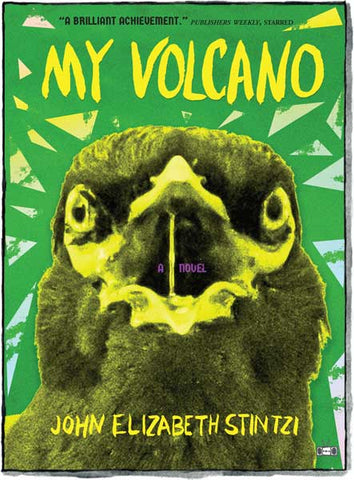
My Volcano
QUICK VIEW
My Volcano
a novel by
John Elizabeth Stintzi
Winner: Sator New Works Award
"Climate change, time travel, startup culture, and volcanic eruptions intertwine in this sui generis outing from [Stintzi]...
It’s a brilliant achievement."
—Publishers Weekly, starred review
With its riveting and audacious vision, My Volcano is a tapestry on fire, a distorted and cinematic new work from the fiercely talented John Elizabeth Stintzi.
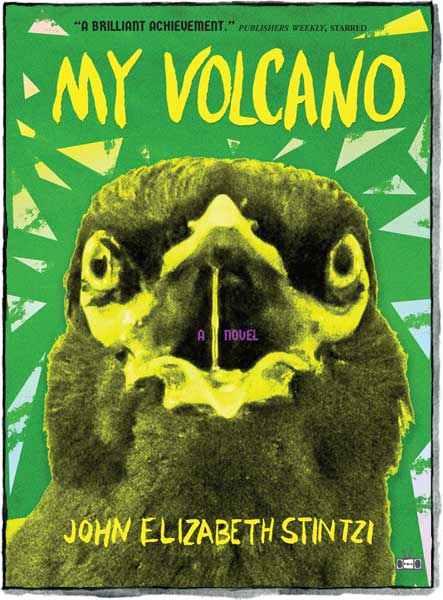
My Volcano
a novel by
John Elizabeth Stintzi
$ 9.99View full product details →$ 10.99"Climate change, time travel, startup culture, and volcanic eruptions intertwine in this sui generis outing from [Stintzi]... Told in a series of buzzing numbered fragments, the narrative whirls around a volcano rising in Central Park that looks like Mount Fuji. As the volcano grows, Stintzi builds out the wide-ranging narrative with jump cuts... That Stintzi keeps all these plates spinning is a wonder; that they transform the chaotic present into a fiery, transcendent vision of the future is even more impressive. It’s a brilliant achievement."
—Publishers Weekly, starred reviewOn June 2, 2016, a protrusion of rock growing from the Central Park Reservoir is spotted by a jogger. Three weeks later, when it finally stops growing, it’s nearly two-and-a-half miles tall, and has been determined to be an active volcano.
As the volcano grows and then looms over New York, an eight-year-old boy in Mexico City finds himself transported 500 years into the past, where he witnesses the fall of the Aztec Empire; a Nigerian scholar in Tokyo studies a folktale about a woman of fire who descends a mountain and destroys an entire village; a white trans writer in Jersey City struggles to write a sci-fi novel about a thriving civilization on an impossible planet; a nurse tends to Syrian refugees in Greece while grappling with the trauma of living through the bombing of a hospital in Kunduz, Afghanistan; a nomadic farmer in Mongolia is stung by a bee, magically transforming him into a green, thorned, flowering creature that aspires to connect every living thing into its consciousness.
With its riveting and audacious vision, My Volcano is a tapestry on fire, a distorted and cinematic new work from the fiercely talented John Elizabeth Stintzi. -
 QUICK VIEW
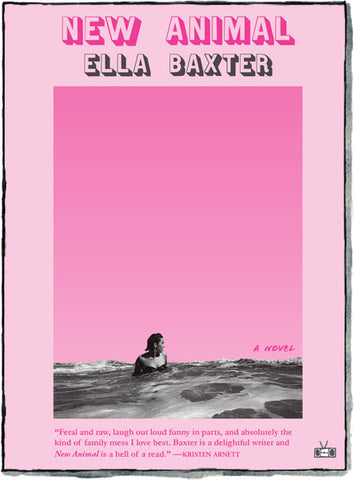
New Animal
QUICK VIEW
New Animal
a novel by
Ella Baxter
Readings Prize for New Australian Fiction, Shortlist
"For fans of Sally Rooney’s brand of millennial malaise and Six Feet Under’s tragicomic take on the mortuary business, New Animal is at turns graphic, raw and tender—a wholly human exploration of the Venn diagram of emotion."
—Sarah Stiefvater, PureWow
New Animal is a poignant, darkly comedic look at human connection from a biting and original new voice in Ella Baxter.
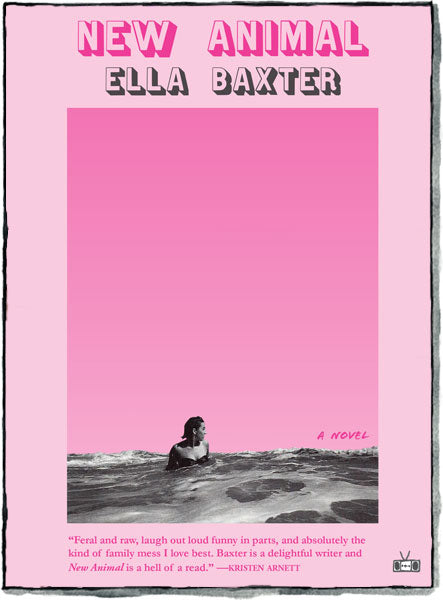
New Animal
a novel by
Ella Baxter
$ 9.99View full product details →$ 10.99"A story about sex, connection and, comically, the Tasmanian BDSM scene, that is by turns profound and funny."
—Kylie Northover, The AgeNew Animal is a poignant, darkly comedic look at human connection from a biting and original new voice in Ella Baxter.
Amelia Aurelia is approaching thirty and her closest relationships — other than her mother — are through her dating apps. She works at the family mortuary business as a cosmetic mortician with her eccentric step-father and older brother, whose throuple’s current preoccupation is with what type of snake to adopt. When Amelia’s affectionate mother passes away without warning, she is left without anchor. Fleeing the funeral, she seeks solace with her birth-father in Tasmania and stumbles into the local BDSM community, where her riotous attempts to belong are met with confusion, shock, and empathy.
Hilarious and heartfelt, New Animal reveals hard-won truths as Amelia struggles to find her place in the world without her mother, with the help of her two well-intentioned fathers and adventures at the kink club. -
 QUICK VIEW
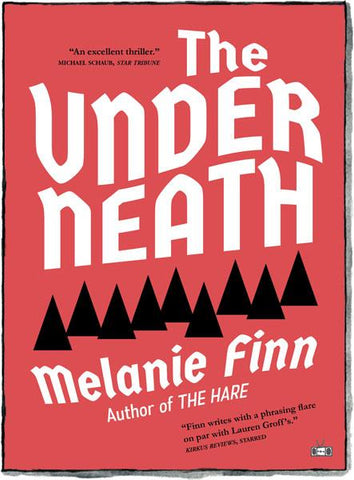
The Underneath
QUICK VIEW
The Underneath
a novel by
Melanie Finn
"Finn is a remarkably confident and supple storyteller."
—New York Times
With the assurance and grace of her acclaimed novel The Gloaming—which earned her comparisons to Patricia Highsmith—Melanie Finn returns with a precisely layered and tense new literary thriller that travels from the Northeast Kingdom to remote Africa. 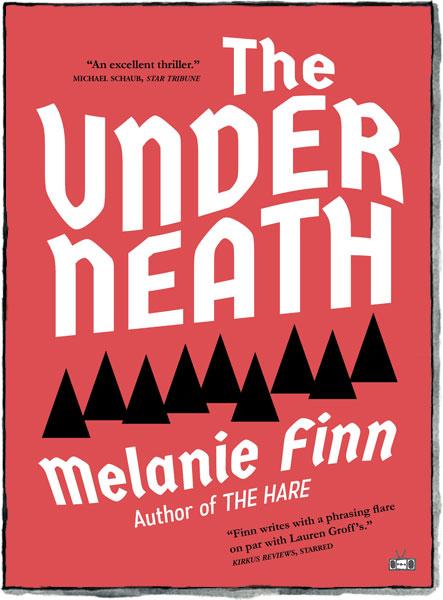
The Underneath
a novel by
Melanie Finn
$ 9.99View full product details →$ 10.99With the assurance and grace of her acclaimed novel The Gloaming—which earned her comparisons to Patricia Highsmith—Melanie Finn returns with a precisely layered and tense new literary thriller.
The Underneath follows Kay Ward, a former journalist struggling with the constraints of motherhood. Along with her husband and two children, she rents a quaint Vermont farmhouse for the summer. The idea is to disconnect from their work-based lifestyle—that had her doggedly pursuing a genocidal leader of child soldiers known as General Christmas, even through Kay's pregnancy and the birth of their second child—in an effort to repair their shaky marriage.
It isn't long before Kay's husband is called away and she discovers a mysterious crawlspace in the rental with unsettling writing etched into the wall. Alongside some of the house's other curiosities and local sleuthing, Kay is led to believe that something terrible may have happened to the home's owners.
Kay's investigation leads her to a local logger, Ben Comeau, a man beset with his own complicated and violent past. A product of the foster system and life-long resident of the Northeast Kingdom, Ben struggles to overcome his situation, and to help an abused child whose addict mother is too incapacitated to care about the boy's plight.
The Underneath is an intelligent and considerate exploration of violence—both personal and social—and whether violence may ever be justified. -
 QUICK VIEW
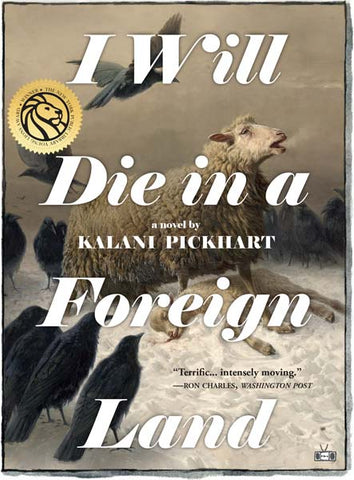
I Will Die in a Foreign Land
QUICK VIEW
I Will Die in a Foreign Land
a novel by
Kalani Pickhart
A Best Book of 2021
Winner: 2022 Young Lions Fiction Award"Since 1991, Ukraine has experienced three revolutions, and Pickhart elegantly captures how these events build up inside a person, giving many Ukrainians an acute awareness of the self as both agent and consequence of history."
—Sonya Bilocerkowycz, The Los Angeles Review of Books
An especially moving story of quiet beauty and love in a time of terror, I Will Die in a Foreign Land is an ambitious and intimate portrait of human perseverance and empathy following four individuals over the course of a volatile Ukrainian winter, as their lives are forever changed by the Euromaidan protests.
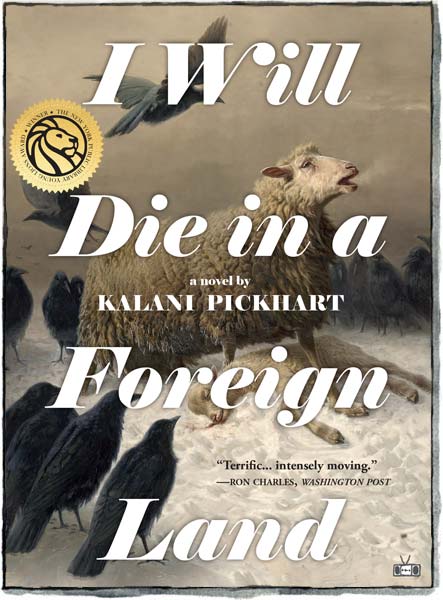
I Will Die in a Foreign Land
a novel by
Kalani Pickhart
$ 8.99View full product details →$ 9.99"Kalani Pickhart's I Will Die in a Foreign Land is of the best kind of protest novels: one that makes you cry, and then makes you mad as hell. It is so far the best artistic treatment of the Euromaidan and Crimean situation, at turns tense, melancholy, and over-abundantly compassionate. This book is both the napalm and the bandages in one."
—Conor Hultman, Square Books (Oxford, MS)In 1913, Igor Stravinsky’s The Rite of Spring premiered at the new Théâtre de Champs-Elysées in Paris. The work so perplexed audiences that a riot broke out. “Only a Russian could do that,” says Aleksandr Ivanovich. “Only a Russian could make the whole world go mad.”
A century later, in November 2013, thousands of Ukrainian citizens gathered at Independence Square in Kyiv to protest then-President Yanukovych’s failure to sign a referendum with the European Union, opting instead to forge a closer alliance with President Vladimir Putin and Russia. The peaceful protests turned violent when military police shot live ammunition into the crowd, killing over a hundred civilians.
I Will Die in a Foreign Land follows four individuals over the course of a volatile Ukrainian winter, as their lives are forever changed by the Euromaidan protests. Katya is a Ukrainian-American doctor stationed at a makeshift medical clinic in St. Michael’s Monastery; Misha is an engineer originally from Pripyat, who has lived in Kyiv since his wife’s death from radiation sickness; Slava is a fiery young activist whose past hardships steel her determination in the face of persecution; and Aleksandr Ivanovich, a former KGB agent, climbs atop a burned-out police bus at Independence Square and plays the piano.
As Katya, Misha, Slava, and Aleksandr’s lives become intertwined, they each seek their own solace during an especially tumultuous and violent period. The story is also told by a chorus of voices that incorporates folklore and narrates a turbulent Slavic history.
While unfolding an especially moving story of quiet beauty and love in a time of terror, I Will Die in a Foreign Land is an ambitious, intimate, and haunting portrait of human perseverance and empathy.
-
 QUICK VIEW
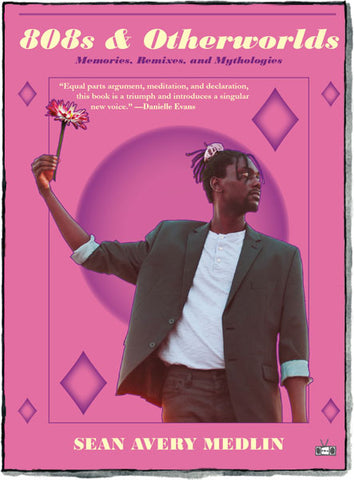
808s & Otherworlds
QUICK VIEW
808s & Otherworlds
a collection of essays and poetry by
Sean Avery Medlin
"Most Anticipated"
—Lambda Literary, Paperback Paris"Don’t sleep on the unpredictable 808s & Otherworlds… an elegant mash of memoir, poetry, tales of appropriation, thoughts on Black masculinity, Hulk, Kanye.
—Christopher Borrelli, Chicago Tribune
From the gut-wrenchingly real stories of young lovers unmythed by segregation or former classmates appropriating Black culture, to the fantastic settings of Hip-Hop songs and comic characters, Medlin weaves a tapestry of worlds and otherworlds while composing a love letter to family and self, told to an undeniably energetic beat. 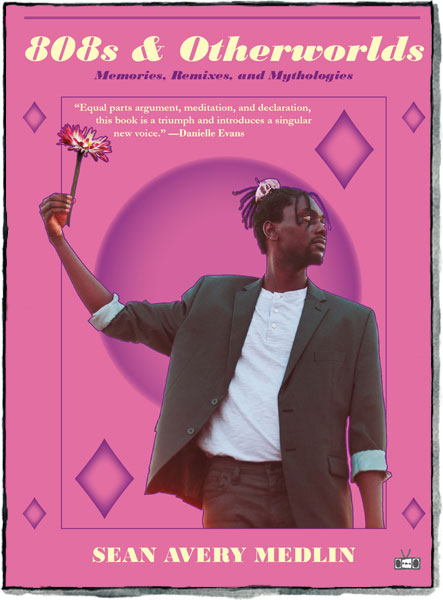
808s & Otherworlds
a collection of essays and poetry by
Sean Avery Medlin
$ 9.99View full product details →$ 10.99* "September’s Most Anticipated LGBTQIA+ Literature" —Lambda Literary
* "Most-Anticipated New LGBTQIA+ Books of 2021" —Paperback Paris“Like the light of an event horizon, this work races toward and struggles against the gravity of Blackness. Lovechild of Sun Ra and Sailor Moon, Sean Avery Medlin sings into the narrow space between hope and rage, bridging political and pop culture galaxies. If our suburbs have become burnt-out satellites circling a world long lost to racism, this book is our S.O.S., transmitting radio waves for searchers and survivors. What an expansive and timely poetic voice!”
—Amaud Jamaul Johnson, author of Imperial Liquor, Red Summer, and Darktown Follies808s & Otherworlds: Memories, Remixes, & Mythologies announces a bold and incendiary new voice in Sean Avery Medlin. Against the backdrop of the Phoenix suburbs where they were raised, Medlin interrogates the effects of media misrepresentation on the performance of Black masculinity. Through storytelling rhymes and vulnerable narratives in conversation with both contemporary Hip-Hop culture and systemic anti-Blackness, 808s & Otherworlds pieces together a speculative reality where Blackfolk are simultaneously superhuman and dehumanized.
From the gut-wrenchingly real stories of young lovers unmythed by segregation or former classmates appropriating Black culture, to the fantastic settings of Hip-Hop songs and comic characters, Medlin weaves a tapestry of worlds and otherworlds while composing a love letter to family and self, told to an undeniably energetic beat.
-
 QUICK VIEW
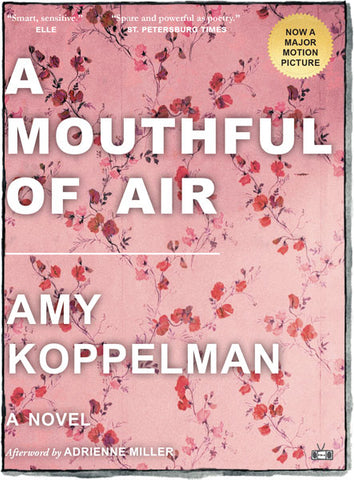
A Mouthful of Air
QUICK VIEW
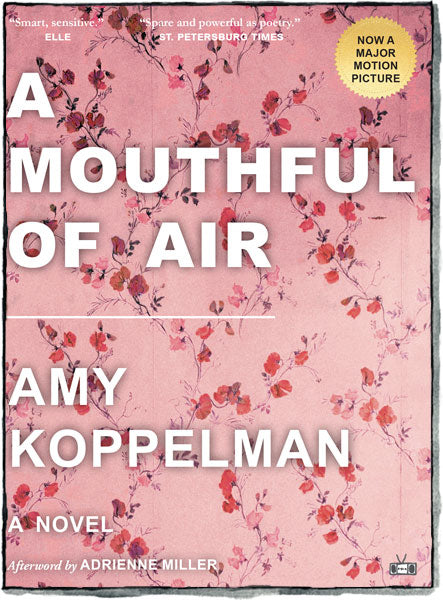
A Mouthful of Air
a novel by
Amy Koppelman
Now a major motion picture starring Amanda Seyfried and Finn Wittrock!
"...[a] novel that quietly builds suspense to the last page."
—Dallas Morning News
Compared to seminal feminist works such as Charlotte Perkins Gilman’s “The Yellow Wallpaper” and Sylvia Plath’s The Bell Jar, A Mouthful of Air is a powerful, tragic statement on motherhood, family, and survival.
A Mouthful of Air
a novel by
Amy Koppelman
$ 9.99View full product details →$ 15.99"...[a] novel that quietly builds suspense to the last page."
—Dallas Morning NewsCompared to seminal feminist works such as Charlotte Perkins Gilman’s “The Yellow Wallpaper” and Sylvia Plath’s The Bell Jar, A Mouthful of Air is a powerful, tragic statement on motherhood, family, and survival.
-
 QUICK VIEW
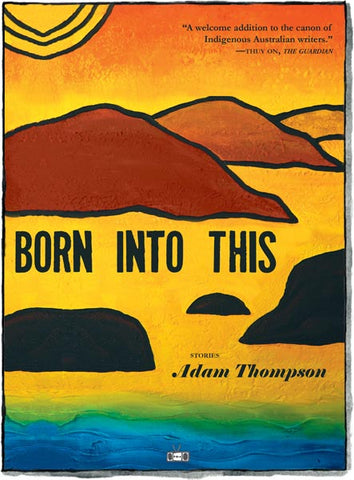
Born Into This
QUICK VIEW
Born Into This
a collection of stories by
Adam Thompson
A Best Book of 2021
Winner: The Story Prize Spotlight Award
Readings Prize for New Australian Fiction, Shortlist
Age Book of the Year award, Finalist“With its wit, intelligence and restless exploration of the parameters of race and place, Thompson’s debut collection is a welcome addition to the canon of Indigenous Australian writers.”
—Thuy On, The Guardian
With humor, pathos, and the occasional sly twist, Thompson’s characters confront discrimination, untimely funerals, classroom politics, the ongoing legacy of cultural destruction, and — overhanging all like a discomforting, burgeoning awareness for both black and white Australia — the inexorable disappearance of the remnant natural world. 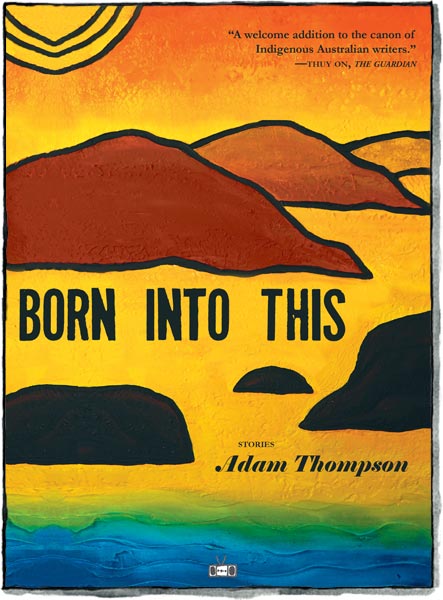
Born Into This
a collection of stories by
Adam Thompson
$ 9.99View full product details →$ 15.99"The Tasmanian landscape and a whole host of engaging, charming and well drawn characters populate the stories that make up Born Into This… a wonderful reminder that there is no monolithic Aboriginal Australian."
—Simon Clark, The AU ReviewFrom an Aboriginal ranger trying to instill some pride in wayward urban teens on the harsh islands off the coast of Tasmania, to those scraping by on the margins of white society railroaded into complex and compromised decisions, Adam Thompson presents a powerful indictment of colonialism and racism.
-
 QUICK VIEW
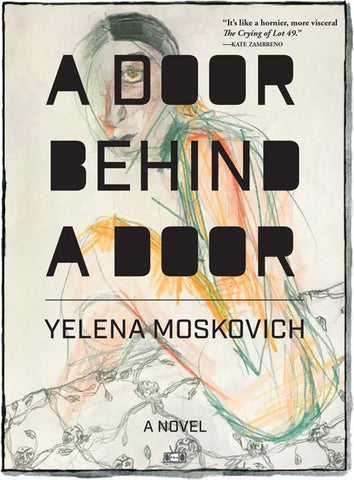
A Door Behind a Door
QUICK VIEW
A Door Behind a Door
a novel by
Yelena Moskovich
DW Reviews "Pick of the Month"
"Moskovich mystifies with this vivid story of a pair of estranged siblings who immigrated to Milwaukee from the Soviet Union as children in 1991... The dynamic style and psychological depth make this an engaging mind bender.” —Publishers Weekly
From visionary author, Yelena Moskovich, A Door Behind A Door follows Olga as she puzzles her way in search of her missing brother, tangling with an underground Midwestern Russian mafia in pursuit of a string of mathematical stabbings. 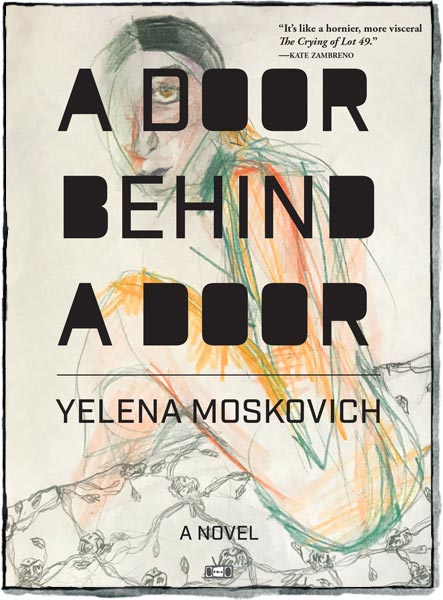
A Door Behind a Door
a novel by
Yelena Moskovich
$ 8.99View full product details →$ 9.99"A hint of Lynch, a touch of Ferrante, the cruel absurdity of Antonin Artaud, the fierce candour of Anaïs Nin, the stylish languor of a Lana del Rey song."
—The Guardian on VirtuosoIn Yelena Moskovich's spellbinding new novel, A Door Behind A Door, we meet Olga, who immigrates as part of the Soviet diaspora of ’91 to Milwaukee, Wisconsin. There she grows up and meets a girl and falls in love, beginning to believe that she can settle down. But a phone call from a bad man from her past brings to life a haunted childhood in an apartment building in the Soviet Union: an unexplained murder in her block, a supernatural stray dog, and the mystery of her beloved brother Moshe, who lost an eye and later vanished. We get pulled into Olga’s past as she puzzles her way through an underground Midwestern Russian mafia, in pursuit of a string of mathematical stabbings.
-
 QUICK VIEW
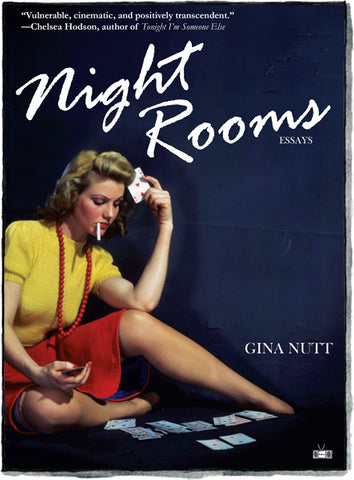
Night Rooms
QUICK VIEW
Night Rooms
a collection of essays by
Gina Nutt
A Best Book of 2021
"[Nutt] spins a striking tale of survival and loss in this haunting essay collection. Nutt uses familiar tropes from horror films as a window into her thinking... Lovers of the personal essay will be thrilled by this innovative collection."
2022 IPPY Medalist for Essay
—Publishers Weekly
Night Rooms is a poetic, intimate collection of personal essays that weaves together fragmented images from horror films and cultural tropes to meditate on anxiety and depression, suicide, body image, identity, grief, and survival.
Night Rooms
a collection of essays by
Gina Nutt
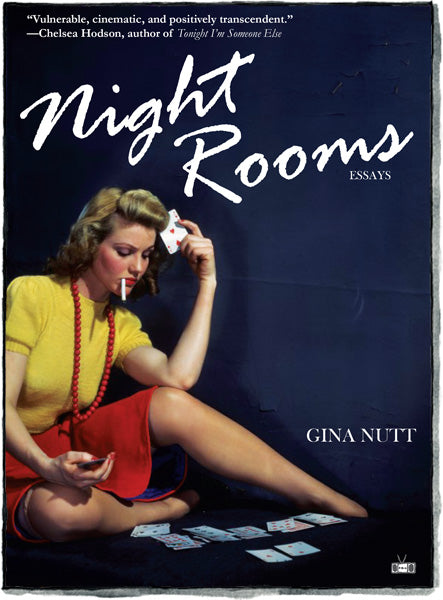
$ 8.99View full product details →$ 9.99Night Rooms is a poetic, intimate collection of personal essays that weaves together fragmented images from horror films and cultural tropes to meditate on anxiety and depression, suicide, body image, identity, grief, and survival.
Whether competing in shopping mall beauty pageants, reflecting on childhood monsters and ballet lessons, or recounting dark cultural ephemera while facing grief and authenticity in the digital age, Gina Nutt’s shifting style echoes the sub-genres that Night Rooms highlights—spirit-haunted slow burns, possession tales, slashers, and revenge films with a feminist bent.
Refracting life through the lens of horror films, Night Rooms masterfully leaps between reality and movies, past and present—because the “final girl’s” story is ultimately a survival story told another way. -
 QUICK VIEW
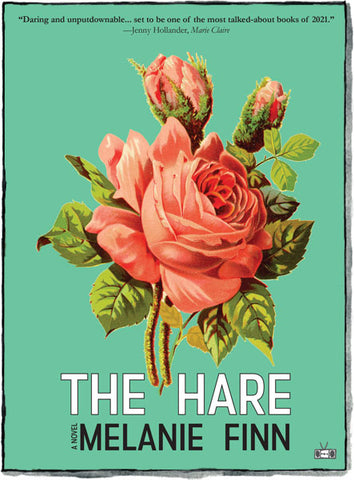
The Hare
QUICK VIEW
The Hare
a novel by
Melanie Finn
A Best Book of 2021
"Daring and unputdownable, The Hare is set to be one of the most talked-about books of 2021."
Vermont Book Award, Winner
—Jenny Hollander, Marie Claire
The Hare is an affecting portrait of Rosie Monroe, her resilience and personal transformation, of her life under the male gaze, and serves as a striking statement about what it means to be a woman in the world.
The Hare
a novel by
Melanie Finn
$ 9.99View full product details →$ 10.99"Daring and unputdownable, The Hare is set to be one of the most talked-about books of 2021."
—Jenny Hollander, Marie Claire"With The Hare, Melanie Finn has written a powerful story of female perseverance, strength, and resilience. This book has rare qualities: beautiful writing while being absolutely unputdownable, and I will be pressing it into the hands of every reader I know." —Claire Fuller, author of Bitter Orange, Our Endless Numbered Days, and Swimming Lessons
"This is a page-turner about a tough woman and her con-artist lout of a partner, and I will eat my laptop if it doesn’t get optioned for TV or film the minute it hits bookshelves. It is also woven through with ideas about feminism, parenting, narcissism, and self-sufficiency—a book that is easy to read without being remotely lightweight." —Molly Young, Vulture
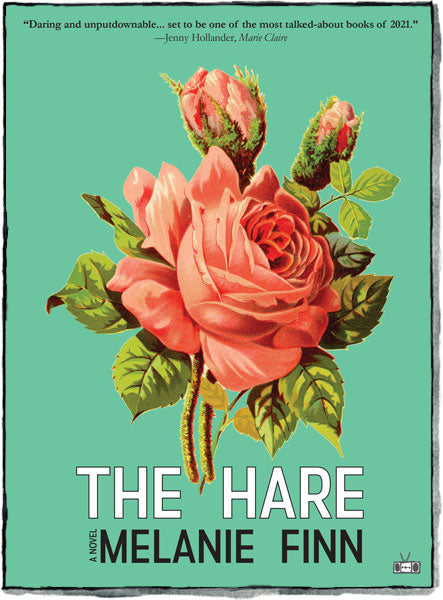
The Hare is an affecting portrait of Rosie Monroe, her resilience and personal transformation, of her life under the male gaze, and serves as a striking statement about what it means to be a woman in the world.
Raised by a stern grandmother to be obedient and obliging in an unremarkable blue-collar town in Massachusetts, Rosie accepts a scholarship to art school in New York City in the 1980s. One morning at a museum she meets a worldly man twenty years her senior, with access to the upper crust of New England society. Bennett is dashing, knows that “boats” refer to yachts (though you never use the word “yacht”), teaches her which direction to spoon soup, and tells stories of “Hemingway moments,” of escapades with Truman Capote and Hunter Thompson in exotic locales. Soon, Rosie is living in a boathouse with Bennett on Connecticut’s Gold Coast, and a daughter — Miranda — is born, just as Bennett’s current con goes awry and forces them to abscond in the middle of the night to the untamed wilderness of Northern Vermont.
Almost immediately, Rosie and Miranda are left at an uninsulated cabin without a car or cash for weeks at a time, so Bennett can tend to a teaching job that may or may not exist at a local university. Rosie is forced to survive on her own, to care for her young daughter, to learn how to stack firewood, snowshoe into town, hunt for wild game, and forage in the forest. As Rosie and Miranda’s life gradually begins to normalize, Bennett and his cons catch up to him, and Rosie is forced to ultimately confront Bennett’s simmering obsession and malevolence.
The Hare is an astounding new literary thriller from a celebrated author at the height of her storytelling powers.
-
 QUICK VIEW
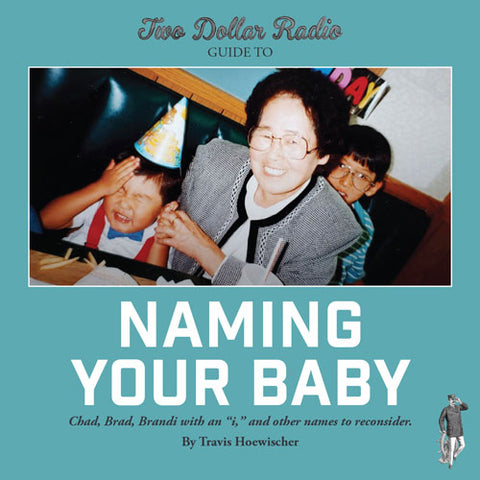
Two Dollar Radio Guide to Naming Your Baby
QUICK VIEW
Two Dollar Radio Guide to Naming Your Baby
a humor collection by
Travis Hoewischer
Unless your child is an '80s villain, we can all agree that Brad, Todd, and Brandi with an "i" are all atrocious ideas. This Two Dollar Radio Guide to Naming Your Baby will help you name your child by calling attention to those names you should probably definitely avoid.
With the Two Dollar Radio Guide to Naming Your Baby, you’ll find plenty of useful information to help you avoid blame when your full-grown Karen asks you why everyone asks her if she wants to ask to see a manager. Your Karen is into horses, we know, but that’s why you should have gone with Millie.
Two Dollar Radio Guide to Naming Your Baby
a humor collection by
Travis Hoewischer
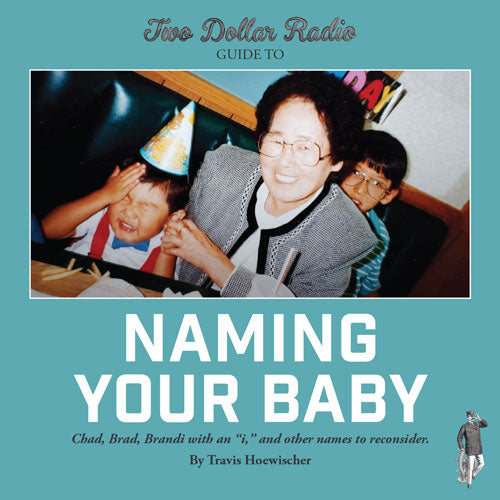
$ 8.99View full product details →$ 9.99Unless your child is an '80s villain, we can all agree that Brad, Todd, and Brandi with an 'i' are all atrocious ideas. This Two Dollar Radio Guide will help you name your child by calling attention to those names you should probably definitely avoid.
Inside, you’ll find musings on all the worst monikers—even yours—which means you now have a new gift idea for your family members. Who needs 23andMe when, rather than finding out if you’re 2.7 percent Welsh, you can get to the bottom of why your cousin Dale Henry is an 8-year-old girl with an overbite, and not a grizzled country and western singer.<br> For Example: <li>Fiona: Ahh, yes, you like Disney. Who doesn’t? But there are no actual princesses, and many Fionas grow up to become penpals with murderers and marry them in prison. You’re playing with fire. <li>Dylan: Can you still love your child if they grow up to send dick pics through LinkedIn? <li>Hailey: It’s hard to hear anyone say, “I’m not racist, but…” Especially when it’s a 14-year-old. Who wronged her? It was you.<br> In this ever-changing world, it’s hard to know how life is going to turn out for your new- or soon-to-be-born. You can’t keep them from getting their heart broken. And you won’t be able to shield every force of evil from them over the course of their whole life. You will, however, be able to avoid naming them Harley. You will need our help.
-
 QUICK VIEW
Two Dollar Radio Guide to Vegan Cooking: The Yellow Edition
QUICK VIEW
Two Dollar Radio Guide to Vegan Cooking: The Yellow Edition
a cookbook & stories by
Jean-Claude van Randy and Speed Dog (w/ Eric Obenauf)
"A perfectly hilarious way to learn some badass recipes."
—Gary Lovely, BuzzFeed News
Imagine Parts Unknown with Anthony Bourdain. But focused on hyping vegan food. Crossed with Scooby Doo. A vegan diet is trending and Two Dollar Radio Headquarters in Columbus, Ohio, has become a vegan comfort food mecca thanks to celebrity chefs Jean-Claude van Randy and Speed Dog (with constructive criticism from Eric Obenauf). Join them in this Guide to Vegan Cooking as they craft delectable recipes, solve mysteries, and slay Vegan Hunger Demons.

Two Dollar Radio Guide to Vegan Cooking: The Yellow Edition
a cookbook & stories by
Jean-Claude van Randy and Speed Dog (w/ Eric Obenauf)
$ 8.99View full product details →$ 9.99We are all explorers, vegan food explorers — join us on this culinary journey as we slay Vegan Hunger Demons.
If you've searched online for a recipe, you've likely encountered a digressive treatise on family history or mundane childhood reflection, none of which actually has anything to do with how to make enchilada sauce. After extensive scrolling, you've really only uncovered that self-taught chef/blogger Linda needs to talk to a professional counselor about her relationship with her mother.
In this Two Dollar Radio Guide to Vegan Cooking: The Yellow Edition, executive vegan chefs Jean-Claude van Randy and Speed Dog (with constructive criticism from Eric Obenauf) unearth a fount of vegan cheffing knowledge. In addition to exquisite recipes and vegan life hacks, they, too, view food as a story: nary a meal is prepared without recalling when Speed Dog summited Old Goat Mountain in Banff, armed with a sack of supplies, a handkerchief, and a wily pack burro.
This guide is for you if: You're looking for satisfying vegan food; interested in a vegan diet but are unwilling to give up cheese; accessible vegan recipes that don't require hard-to-find ingredients you have to google and can't pronounce; the adventurous tales behind the meals.
-
 QUICK VIEW
A History of My Brief Body
QUICK VIEW
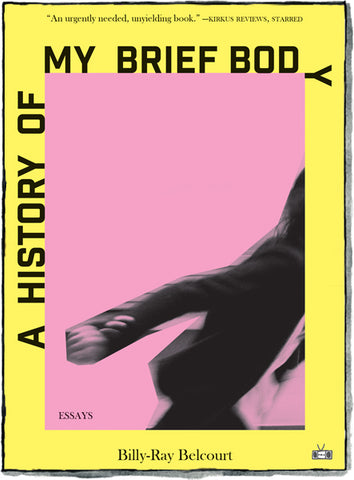
A History of My Brief Body
a collection of essays by
Billy-Ray Belcourt
A Best Book of 2020
Lambda Literary Award Finalist"[Belcourt] ably balances poetic, philosophical, and political insights throughout this unique book... An urgently needed, unyielding book of theoretical and intimate strength."
—Kirkus Reviews, starred
For readers of Ocean Vuong and Maggie Nelson and fans of Heart Berries by Terese Marie Mailhot, A History of My Brief Body is a brave, raw, and fiercely intelligent collection of essays and vignettes on grief, colonial violence, joy, love, and queerness.
A History of My Brief Body
a collection of essays by
Billy-Ray Belcourt
$ 9.99View full product details →$ 15.99* A Best Book of 2020 —Kirkus Reviews, Book Riot, CBC, Globe and Mail, Largehearted Boy.
"In sharp pieces infused with a yearning for decolonized love and freedom, Belcourt, of the Driftpile Cree Nation, ably balances poetic, philosophical, and political insights throughout this unique book... An urgently needed, unyielding book of theoretical and intimate strength."
—Kirkus Reviews, starred reviewThe youngest ever winner of the Griffin Prize mines his personal history in a brilliant new essay collection seeking to reconcile the world he was born into with the world that could be.
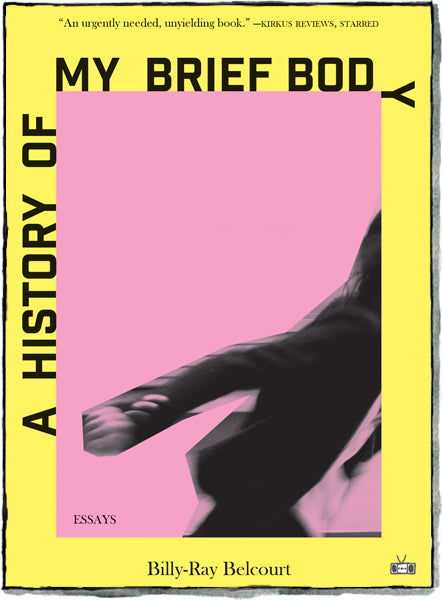
For readers of Ocean Vuong and Maggie Nelson and fans of Heart Berries by Terese Marie Mailhot, A History of My Brief Body is a brave, raw, and fiercely intelligent collection of essays and vignettes on grief, colonial violence, joy, love, and queerness.
Billy-Ray Belcourt’s debut memoir opens with a tender letter to his kokum and memories of his early life in the hamlet of Joussard, Alberta, and on the Driftpile First Nation. Piece by piece, Billy-Ray’s writings invite us to unpack and explore the big and broken world he inhabits every day, in all its complexity and contradiction: a legacy of colonial violence and the joy that flourishes in spite of it; first loves and first loves lost; sexual exploration and intimacy; the act of writing as a survival instinct and a way to grieve. What emerges is not only a profound meditation on memory, gender, anger, shame, and ecstasy, but also the outline of a way forward. With startling honesty, and in a voice distinctly and assuredly his own, Belcourt situates his life experiences within a constellation of seminal queer texts, among which this book is sure to earn its place.
Eye-opening, intensely emotional, and excessively quotable, A History of My Brief Body demonstrates over and over again the power of words to both devastate and console us.
-
 QUICK VIEW
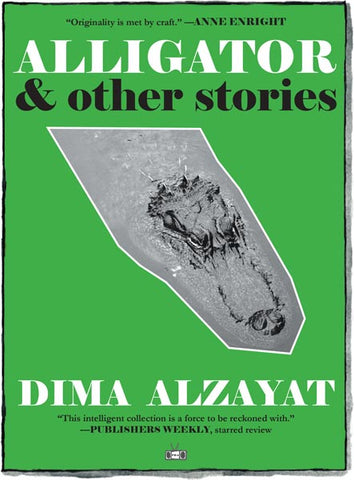
Alligator and Other Stories
QUICK VIEW
Alligator and Other Stories
a collection of stories by
Dima Alzayat
A Best Book of 2020
"The richly detailed short fictions in this debut from a Damascus-born scribe form an intricate, breathtaking mosaic of modern Muslim life."
PEN/Robert W. Bingham Award Finalist
Swansea University Dylan Thomas Prize Finalist
The Story Prize Longlist
Arab American Book Awards, Honorable Mention
—Michelle Hart, O, The Oprah Magazine
Alligator and Other Stories is haunting, spellbinding, and unforgettable, while marking Dima Alzayat’s arrival as a tremendously gifted new talent. 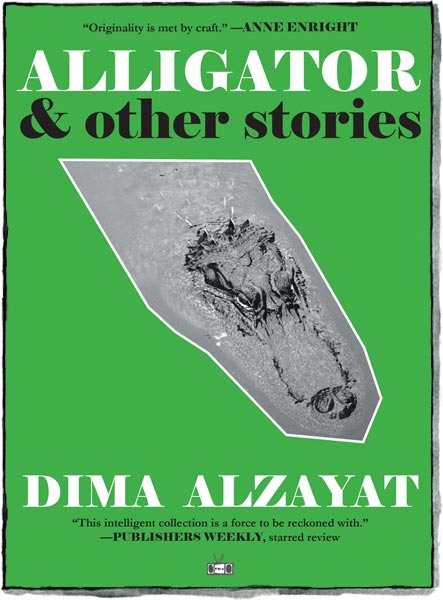
Alligator and Other Stories
a collection of stories by
Dima Alzayat
$ 9.99View full product details →$ 10.99"Alzayat’s slim, powerful debut collection showcases the author’s deep empathy and imagination in stories about grief, assimilation, and trauma... This intelligent collection is a force to be reckoned with."
—Publishers Weekly, starred review*2021 PEN/Robert W. Bingham Award for Debut Short Story Collection, Finalist.
*2021 Swansea University Dylan Thomas Prize 2021, Longlist."A stellar debut... Alzayat manages to execute a short but thoughtful meditation on the spectrum of race in America from Jackson’s presidency to present." —Colin Groundwater, GQ
"The richly detailed short fictions in this debut from a Damascus-born scribe form an intricate, breathtaking mosaic of modern Muslim life." —Michelle Hart, O, The Oprah Magazine
The award-winning stories in Dima Alzayat’s collection are luminous and tender, whether dealing with a woman performing burial rites for her brother in “Ghusl,” or a great-aunt struggling to explain cultural identity to her niece in “Once We Were Syrians.”
Alzayat’s stories are rich and relatable, chronicling a sense of displacement through everyday scenarios. There is the intern in pre-#MeToo Hollywood of “Only Those Who Struggle Succeed,” the New York City children on the lookout for a place to play on the heels of Etan Patz’s kidnapping in “Disappearance,” and the “dangerous” women of “Daughters of Manāt” who struggle to assert their independence.
The title story, “Alligator,” is a masterpiece of historical reconstruction and intergenerational trauma, told in an epistolary format through social media posts, newspaper clippings, and testimonials, that starts with the true story of the lynching of a Syrian immigrant couple by law officers in small-town Florida. Placed in a wider context of U.S. racial violence, the extrajudicial deaths, and what happens to the couple’s children and their children’s children in the years after, challenges the demands of American assimilation and its limits.
Alligator and Other Stories is haunting, spellbinding, and unforgettable, while marking Dima Alzayat’s arrival as a tremendously gifted new talent. -
 QUICK VIEW
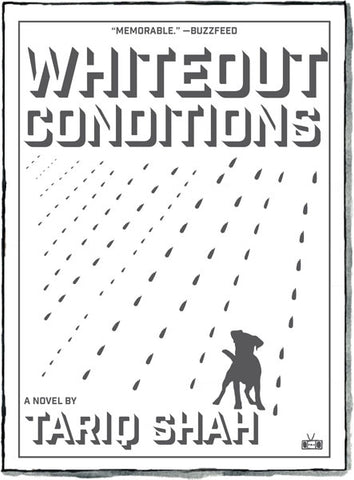
Whiteout Conditions
QUICK VIEW
Whiteout Conditions
a novel by
Tariq Shah
BuzzFeed 'Most Highly Anticipated Books Of 2020'
"A dazzling narrative about loss, coping mechanisms, and vengeance." —Ruth Minah Buchwald, Electric Literature
With a poet’s sensibility, Shah navigates the murky responsibilities of adulthood, grief, toxic masculinity, and the tragedy of revenge in this haunting Midwestern noir. 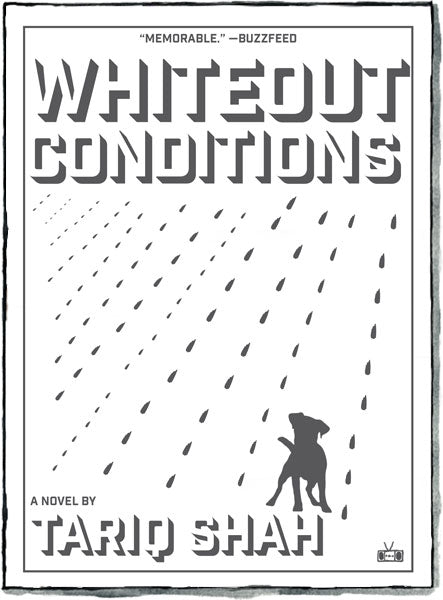
Whiteout Conditions
a novel by
Tariq Shah
$ 9.99View full product details →$ 10.99BuzzFeed "Most Highly Anticipated Books Of 2020"
Ant is back in Chicago for a funeral, and he typically enjoys funerals. Since most of his family has passed away, he finds himself strangely attracted to their endearing qualities: the hyperbolic language, the stoner altar boy, seeing friends in suits for the first time. That is, until the tragic death of Ray—Ant’s childhood friend, Vince’s teenage cousin. Ray was the younger third-wheel that Ant and Victor were stuck babysitting while in high school, and his sudden death makes national news.
In the depths of a brutal Midwest winter, Ant rides with Vince through the falling snow to Ray’s funeral, an event that has been accruing a sense of consequence. With a poet’s sensibility, Shah navigates the murky responsibilities of adulthood, grief, toxic masculinity, and the tragedy of revenge in this haunting Midwestern noir. -
 QUICK VIEW
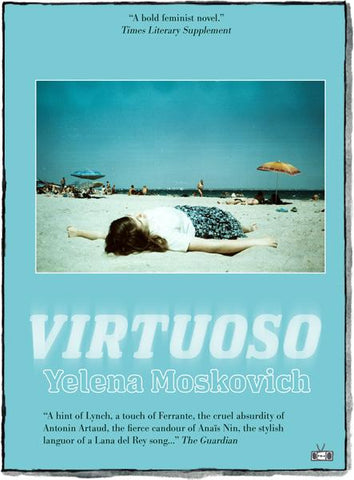
Virtuoso
QUICK VIEW
Virtuoso
a novel by
Yelena Moskovich
A Best Book of 2020
"A hint of Lynch, a touch of Ferrante, the cruel absurdity of Antonin Artaud, the fierce candour of Anaïs Nin, the stylish languor of a Lana del Rey song...” —Shahidha Bari, The Guardian
Swansea University Dylan Thomas Prize Finalist
With a distinctive prose flair and spellbinding vision, Virtuoso is a story of love, loss, and self-discovery that heralds Yelena Moskovich as a brilliant and one-of-a-kind visionary. 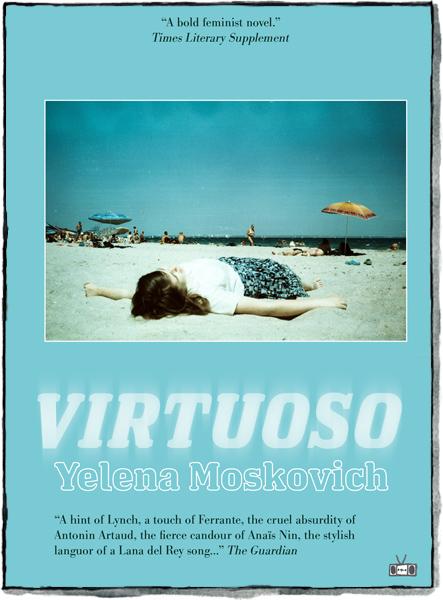
Virtuoso
a novel by
Yelena Moskovich
$ 9.99View full product details →$ 10.99"A hint of Lynch, a touch of Ferrante, the cruel absurdity of Antonin Artaud, the fierce candour of Anaïs Nin, the stylish languor of a Lana del Rey song."
—The GuardianAs Communism begins to crumble in Prague in the 1980s, Jana’s unremarkable life becomes all at once remarkable when a precocious young girl named Zorka moves into the apartment building with her mother and sick father. With Zorka's signature two-finger salute and abrasive wit, she brings flair to the girls’ days despite her mother’s protestations to not “be weird.” But after scorching her mother’s prized fur coat and stealing from a nefarious teacher, Zorka suddenly disappears.
Meanwhile in Paris, Aimée de Saint-Pé married young to an older woman, Dominique, an actress whose star has crested and is in decline. A quixotic journey of self-discovery, Virtuoso follows Zorka as she comes of age in Prague, Wisconsin, and then Boston, amidst a backdrop of clothing logos, MTV, computer coders, and other outcast youth. But it isn’t till a Parisian conference hall brimming with orthopedic mattresses and therapeutic appendages when Jana first encounters Aimée, their fates steering them both to a cryptic bar on the Rue de Prague, and, perhaps, to Zorka.
With a distinctive prose flair and spellbinding vision, Virtuoso is a story of love, loss, and self-discovery that heralds Yelena Moskovich as a brilliant and one-of-a-kind visionary. -
 QUICK VIEW
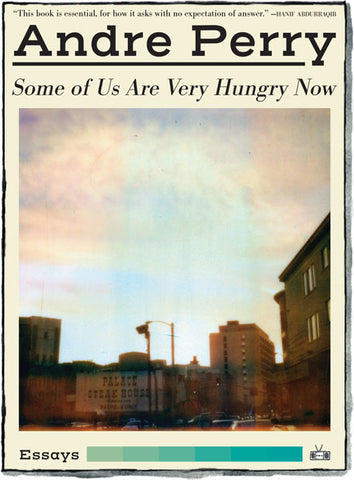
Some of Us Are Very Hungry Now
QUICK VIEW
Some of Us Are Very Hungry Now
a collection of essays by
Andre Perry
A Best Book of 2019
"Beautiful, brilliant, bold... These are songs of identity and sexuality and expectations the world has of African American males."
—Christopher John Stephens, PopMatters
The essays in Some of Us Are Very Hungry Now take the form of personal reflection, multiple choice questions, screenplays, and imagined talk-show conversations, while traversing the daily minefield of a childhood schoolyard to dimly-lit late nights in Midwestern bars. The impression of Perry’s personal journey is arresting and beguiling, while announcing the author’s arrival as a formidable American voice. 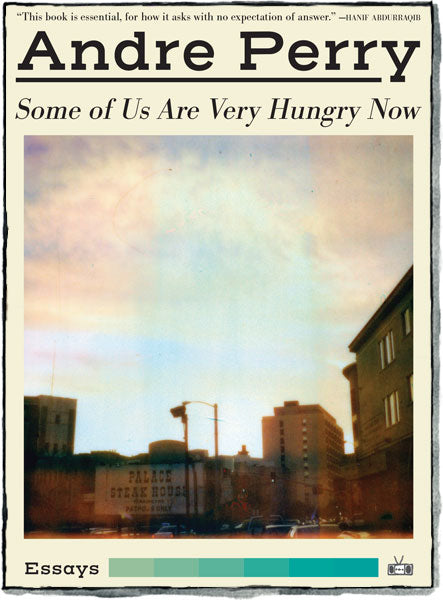
Some of Us Are Very Hungry Now
a collection of essays by
Andre Perry
$ 9.99View full product details →$ 10.99*A Best Book of 2019 —Pop Matters
*A Most Anticipated Book of 2019 —LitReactor, The A.V. Club, Big Other"A complete, deep, satisfying read... The variety of structures, formats, and rhythms Perry uses in Some of Us Are Very Hungry Now is extraordinary... These essays shine with broken humanity and announce the arrival of a new voice in contemporary nonfiction, but they do so with heaps of melancholia and frustration instead of answers. That Perry can hurt us and keep us asking for more is a testament to his talent as a storyteller."
—Gabino Iglesias, NPRWith luminous insight and fervent prose, Andre Perry’s debut collection of personal essays travels from Washington DC to Iowa City to Hong Kong in search of both individual and national identity. While displaying tenderness and a disarming honesty, Perry catalogues racial degradations committed on the campuses of elite universities to liberal bastions like San Francisco while coming of age in America.
The essays in Some of Us Are Very Hungry Now take the form of personal reflection, multiple choice questions, screenplays, and imagined talk-show conversations, while traversing the daily minefield of a childhood schoolyard to dimly-lit late nights in Midwestern bars. The impression of Perry’s personal journey is arresting and beguiling, while announcing the author’s arrival as a formidable and ferocious American voice.
-
 QUICK VIEW
Savage Gods
QUICK VIEW
Savage Gods
a book by
Paul Kingsnorth
A Best Book of 2019
"A beautiful, intelligent, extremely poetic book about a writer dissecting his thoughts and feelings on the page without the protective layer of fiction."
—Gabino Iglesias, NPR
Informed by Kingsnorth's experiences interacting with indigenous peoples, the writings of D.H. Lawrence and Annie Dillard, and the day-to-day travails of farming his own land, Savage Gods seeks nothing less than to dismantle modern civilization. 
Savage Gods
a book by
Paul Kingsnorth
$ 9.99View full product details →$ 10.99"Savage Gods is a beautiful, intelligent, extremely poetic book about a writer dissecting his thoughts and feelings on the page without the protective layer of fiction."
—Gabino Iglesias, NPRAfter moving with his wife and two children to a smallholding in Ireland, Paul Kingsnorth expects to find contentment. It is the goal he has sought — to nest, to find home — after years of rootlessness as an environmental activist and author. Instead he finds that his tools as a writer are failing him, calling into question his foundational beliefs about language and setting him at odds with culture itself.
Informed by his experiences with indigenous peoples, the writings of D.H. Lawrence and Annie Dillard, and the day-to-day travails of farming his own land, Savage Gods asks: what does it mean to belong? What sacrifices must be made in order to truly inhabit a life? And can words ever paint the truth of the world — or are they part of the great lie which is killing it? -
 QUICK VIEW
The Book of X
QUICK VIEW
The Book of X
a novel by
Sarah Rose Etter
A Best Book of 2019
"Etter brilliantly, viciously lays bare what it means to be a woman in the world, what it means to hurt, to need, to want, so much it consumes everything."
Winner: Shirley Jackson Award for Novel
—Roxane Gay
A surreal exploration of one woman’s life and death against a landscape of meat, office desks, and bad men. 
The Book of X
a novel by
Sarah Rose Etter
$ 9.99View full product details →$ 10.99*Winner of the 2019 Shirley Jackson Awards for Novel
*The Believer Book Awards, 2019: Editors' Longlists in Fiction
*The Northern California ‘Golden Poppy’ Book Awards 2019, Fiction longlist
*2020 VCU Cabell First Novelist Award Longlist
*A Best Book of 2019 —Vulture, Entropy, Buzzfeed, ThrillistA surreal exploration of one woman’s life and death against a landscape of meat, office desks, and bad men.
The Book of X tells the tale of Cassie, a girl born with her stomach twisted in the shape of a knot. From childhood with her parents on the family meat farm, to a desk job in the city, to finally experiencing love, she grapples with her body, men, and society, all the while imagining a softer world than the one she is in. Twining the drama of the everyday—school-age crushes, paying bills, the sickness of parents—with the surreal—rivers of thighs, men for sale and fields of throats—Cassie’s realities alternate to create a blurred, fantastic world of haunting beauty.
-
 QUICK VIEW
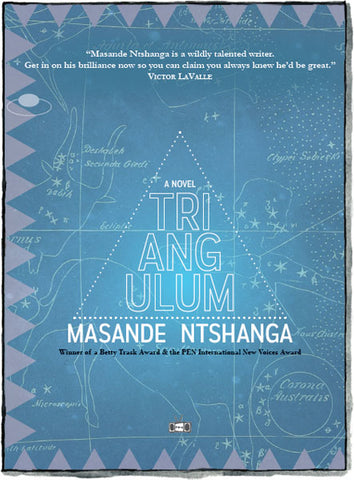
Triangulum
QUICK VIEW
Triangulum
a novel by
Masande Ntshanga
2020 Nomo Awards Shortlist: Best Novel
"Magnificently disorienting and meticulously constructed, Triangulum couples an urgent subtext with an unceasing sense of mystery. This is a thought-provoking dream of a novel."
—Tobias Carroll, Tor.com
Triangulum is an ambitious, often philosophical and genre-bending novel that covers a period of over 40 years in South Africa’s recent past and near future. 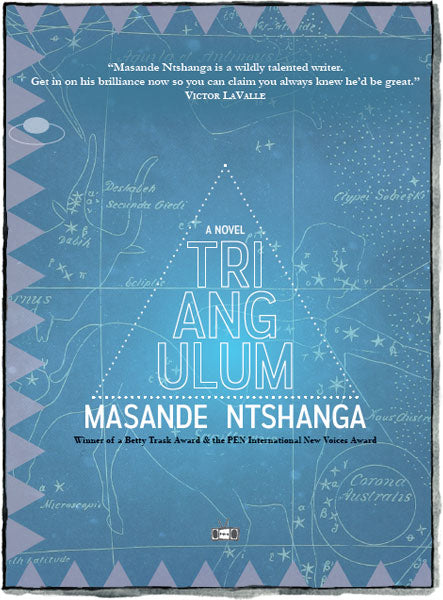
Triangulum
a novel by
Masande Ntshanga
$ 9.99View full product details →$ 10.99Triangulum is an ambitious, often philosophical and genre-bending novel that covers a period of over 40 years in South Africa’s recent past and near future — starting from the collapse of the apartheid homeland system in the early 1990s, to the economic corrosion of the 2010s, and on to the looming, large-scale ecological disasters of the 2040s.
In 2040, the South African National Space Agency receives a mysterious package containing a memoir and a set of digital recordings from an unnamed woman who claims the world will end in ten years. Assigned to the case, Dr. Naomi Buthelezi, a retired professor and science-fiction writer, is hired to investigate the veracity of the materials, and whether or not the woman's claim to have heard from a “force more powerful than humankind” is genuine.
Thus begins TRIANGULUM, a found manuscript composed of the mysterious woman’s memoir and her recordings. Haunted by visions of a mysterious machine, the narrator is a seemingly adrift 17-year-old girl, whose sick father never recovered from the shock of losing his wife. She struggles to navigate school, sexual experimentation, and friendship across racial barriers in post-Apartheid South Africa.
When three girls go missing from their town, on her mother's birthday, the narrator is convinced that it has something to do with "the machine" and how her mother also went missing in the '90s. Along with her friends, Litha and Part, she discovers a puzzling book on UFOs at the library, the references and similarities in which lead the friends to believe that the text holds clues to the narrators’s mother's abduction. Drawing upon suggestions in the text, she and her friends set out on an epic journey that takes them from their small town to an underground lab, a criminal network, and finally, a mysterious, dense forest, in search of clues as to what happened to the narrator's mother.
With extraordinary aplomb and breathtaking prose, Ntshanga has crafted an inventive and marvelous artistic accomplishment. -
 QUICK VIEW
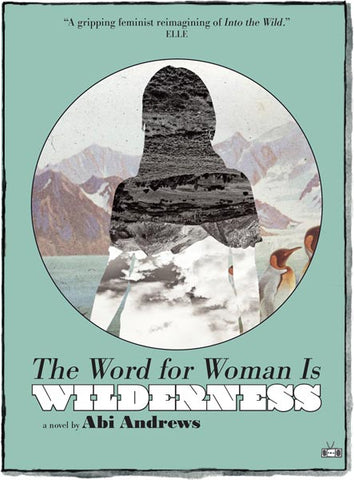
The Word for Woman Is Wilderness
QUICK VIEW
The Word for Woman Is Wilderness
a novel by
Abi Andrews
"Beguiling, audacious... displays wide reading, clever writing and amusing dialogue."
—Sarah Moss, The Guardian
This is a new kind of nature writing—one that crosses fiction with science writing and puts gender politics at the center of the landscape. 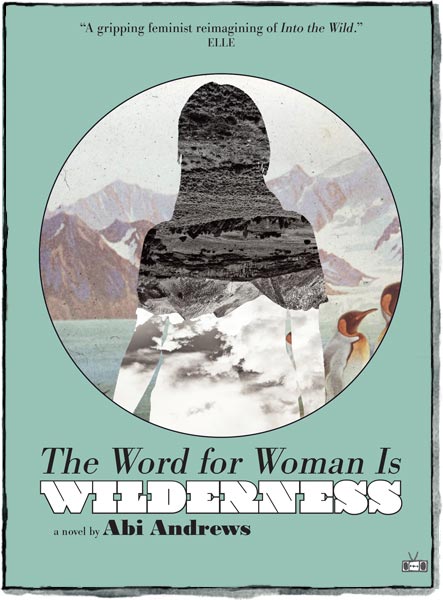
The Word for Woman Is Wilderness
a novel by
Abi Andrews
$ 9.99View full product details →$ 10.99"Beguiling, audacious... rises to its own challenges in engaging intellectually as well as wholeheartedly with its questions about gender, genre and the concept of wilderness. The novel displays wide reading, clever writing and amusing dialogue."
—Sarah Moss, The GuardianThis is a new kind of nature writing — one that crosses fiction with science writing and puts gender politics at the center of the landscape.
Erin, a 19-year-old girl from middle England, is travelling to Alaska on a journey that takes her through Iceland, Greenland, and across Canada. She is making a documentary about how men are allowed to express this kind of individualism and personal freedom more than women are, based on masculinist ideas of survivalism and the shunning of society: the “Mountain Man.” She plans to culminate her journey with an experiment: living in a cabin in the Alaskan wilderness, a la Thoreau, to explore it from a feminist perspective.
The book is a fictional time-capsule curated by Erin from this time comprising of personal narrative, fact, anecdote, images and maps, on subjects as diverse as The Golden Records, Voyager 1, the moon landings, the appropriation of native land and culture, Rachel Carson, The Order of The Dolphin, The Doomsday Clock, Ted Kaczynski, Valentina Tereshkova, Jack London, Thoreau, Darwin, Nuclear war, The Letters of Last Resort and the pill, amongst many other topics.
-
 QUICK VIEW
Away! Away!
QUICK VIEW
Away! Away!
a novel by
Jana Beňová
Translated by Janet Livingstone
"Beňová’s short, fast novels are a revolution against normality."
—Austrian Broadcasting Corporation, ORF
Winner of the European Union Prize for Literature, Away! Away! is a shimmering mosaic examining human relationships, from Slovakia's most acclaimed novelist. 
Away! Away!
a novel by
Jana Beňová
Translated by Janet Livingstone
$ 7.99View full product details →$ 8.99"Beňova’s novel riffs on stories old and new, and the means by which we tell and experience them, to bring the reader inside her protagonist’s mind."
—Vol. 1 BrooklynSometimes running away is the bravest option. Or, so believes Rosa, who ditches her husband and home and takes off on the road. Along the way, she encounters the owner of a puppet theater who’s on a mission to conquer the world with his performance of The Snow Queen.
Which character from this old fairy tale will Rosa identify with? With Gerda, searching fruitlessly for her lost love? With Kai, who flees home and his beloved one day without a word? Or with the Snow Queen, who seems to stand aloof above it all?
With magnetic, sparkling prose, Beňová delivers a lively mosaic that ruminates on human relationships, our greatest fears and desires.
-
 QUICK VIEW
The Deeper the Water the Uglier the Fish
QUICK VIEW
The Deeper the Water the Uglier the Fish
a novel by
Katya Apekina
A Best Book of 2018
L.A. Times Book Prize Finalist"It's a stunningly accomplished book, and Apekina isn't afraid to grab her readers by the hand and take them to some very dark and very beautiful places."
—Michael Schaub, NPR
Powerfully captures the quiet torment of two sisters craving the attention of a parent they can’t, and shouldn’t, have to themselves. 
The Deeper the Water the Uglier the Fish
a novel by
Katya Apekina
$ 9.99View full product details →$ 10.99*A Best Book of 2018 —Kirkus Reviews, BuzzFeed News, Entropy, LitReactor
It’s 16-year-old Edie who finds their mother Marianne dangling in the living room from an old jump rope, puddle of urine on the floor, barely alive. Upstairs, 14-year-old Mae had fallen into one of her trances, often a result of feeling too closely attuned to her mother’s dark moods. After Marianne is unwillingly admitted to a mental hospital, Edie and Mae are forced to move from their childhood home in Louisiana to New York to live with their estranged father, Dennis, a former civil rights activist and literary figure on the other side of success.
The girls, grieving and homesick, are at first wary of their father’s affection, but soon Mae and Edie’s close relationship begins to fall apart—Edie remains fiercely loyal to Marianne, convinced that Dennis is responsible for her mother’s downfall, while Mae, suffocated by her striking resemblances to her mother, feels pulled toward their father. The girls move in increasingly opposing and destructive directions as they struggle to cope with outsized pain, and as the history of Dennis and Marianne’s romantic past clicks into focus, the family fractures further.
Moving through a selection of first-person accounts and written with a sinister sense of humor, The Deeper the Water the Uglier the Fish powerfully captures the quiet torment of two sisters craving the attention of a parent they can’t, and shouldn’t, have to themselves. In this captivating debut, Katya Apekina disquietingly crooks the lines between fact and fantasy, between escape and freedom, and between love and obsession. -
 QUICK VIEW
The Blurry Years
QUICK VIEW
The Blurry Years
a novel by
Eleanor Kriseman
A Best Book of 2018
"Assured and affecting... Kriseman’s is a new voice to celebrate."
—Publishers Weekly
A powerful and unorthodox coming-of-age story from an assured new literary voice, featuring a stirringly twisted mother-daughter relationship, set against the sleazy, vividly-drawn backdrop of late-seventies and early-eighties Florida. 
The Blurry Years
a novel by
Eleanor Kriseman
$ 9.99View full product details →$ 10.99*Best Books of 2018 —Entropy
The Blurry Years is a powerful and unorthodox coming-of-age story from an assured new literary voice, featuring a stirringly twisted mother-daughter relationship, set against the sleazy, vividly-drawn backdrop of late-seventies and early-eighties Florida.
Callie—who ages from six to eighteen over the course of the book—leads a scattered childhood, moving from cars to strangers’ houses to the sand-dusted apartments of the tourist towns that litter the Florida coastline.
Callie’s is a story about what it’s like to grow up too fast and absorb too much, to watch adults behaving badly; what it’s like to be simultaneously in thrall to and terrified of the mother who is the only family you've ever known, who moves you from town to town to leave her own mistakes behind.
With precision and poetry, Kriseman's moving tale of a young girl struggling to find her way in the world is potent, and, ultimately, triumphant. -
 QUICK VIEW
Palaces
QUICK VIEW
Palaces
a novel by
Simon Jacobs
Starred reviews: Publishers Weekly, Foreword Reviews
"Palaces is robust, both current and clairvoyant, and answers the question of what happens when our deepest fantasies become reality.—Foreword Reviews, starred review
While exercising precision and a cool detachment, Simon Jacobs has crafted a surreal and spellbinding first novel of horror and intrigue. 
Palaces
a novel by
Simon Jacobs
$ 8.99View full product details →$ 9.99John and Joey are a young couple immersed in their local midwestern punk scene, who after graduating college sever all ties and move to a perverse and nameless northeastern coastal city. They drift in and out of art museums, basement shows, and derelict squats seemingly unfazed as the city slowly slides into chaos around them.
Late one night, forced out of their living space, John and Joey are driven to take shelter in a chain pharmacy before emerging to a city in full-scale riot. They find themselves the only passengers on a commuter train headed north, and exit at the final stop to discover the area entirely devoid of people. As John and Joey negotiate their future through bizarre, troubling manifestations of the landscape and a succession of abandoned mansions housing only scant clues to their owners' strange and sudden disappearance, they're also forced to confront the resurgent violence and buried memories of their shared past.
With incisive precision and a cool detachment, Simon Jacobs has crafted a surreal and spellbinding first novel of horror and intrigue. -
 QUICK VIEW
White Dialogues
QUICK VIEW
White Dialogues
a collection of stories by
Bennett Sims
A Best Book of 2017
“Anyone who admires such pyrotechnics of language will find 21st-century echoes of Edgar Allan Poe in Sims’s portraits of paranoia and delusion, with their zodiacal narrowing and the maddening tungsten spin of their narratives.”
Winner: The Rome Prize for Literature
—New York Times Book Review
The debut collection of phantasmagorical stories from award-winning novelist, Bennett Sims. 
White Dialogues
a collection of stories by
Bennett Sims
$ 8.99View full product details →$ 9.99*Winner of the Rome Prize for Literature 2018-19
With all the brilliance, bravado, and wit of his award-winning debut, A Questionable Shape, Bennett Sims returns with an equally ambitious and wide-ranging collection of stories.
A house-sitter alone in a cabin in the woods comes to suspect that the cabin may need to be “unghosted.” A raconteur watches as his personal story is rewritten on an episode of This American Life. And in the collection’s title story, a Hitchcock scholar sitting in on a Vertigo lecture is gradually driven mad by his own theory of cinema.
In these eleven stories, Sims moves from slow-burn psychological horror to playful comedy, bringing us into the minds of people who are haunted by their environments, obsessions, and doubts. Told in electric, insightful prose, White Dialogues is a profound exploration of the way we uncover meaning in a complex, and sometimes terrifying, world. It showcases Sims’s rare talent and confirms his reputation as one of the most exciting young writers at work today. -
 QUICK VIEW
Found Audio
QUICK VIEW
Found Audio
a novel by
N.J. Campbell
A Best Book of 2017
"Amid the static of contemporary literature can be heard blips of fiction-future in N.J. Campbell’s defiantly bold Found Audio."
—Steve Erickson
For the first time ever, Found Audio presents a complete transcription of the unsettling audio recordings of a mysterious unnamed adventure journalist and his decades-long pursuit of the Borgesian "City of Dreams," alongside analysis from audio expert, Amrapali Anna Singh. 
Found Audio
a novel by
N.J. Campbell
$ 8.99View full product details →$ 9.99* A Best Book of 2017 —Writer's Bone
"[A] mysterious work of metafiction... dizzying, arresting and defiantly bold."
—Chicago TribuneAmrapali Anna Singh is an historian and analyst capable of discerning the most cryptic and trivial details from audio recordings. One day, a mysterious man appears at her office in Dutch Harbor, Alaska, having traveled a great distance to bring her three Type IV audio cassettes that bear the stamp of a library in Buenos Aires that may or may not exist.
On the cassettes is the deposition of an adventure journalist and his obsessive pursuit of an amorphous, legendary, and puzzling "City of Dreams." Spanning decades, his quest leads him from a snake-hunter in the Louisiana bayou to the walled city of Kowloon on the eve of its destruction, from the Singing Dunes of Mongolia to a chess tournament in Istanbul. The deposition also begs the question: Who is making the recording, and why?
Despite being explicitly instructed not to, curiosity gets the better of Singh and she mails a transcription of the cassettes with her analysis to an acquaintance before vanishing. The man who bore the cassettes, too, has disappeared. The journalist was unnamed.
Here—for the first time—is the complete archival manuscript of the mysterious recordings accompanied by Singh's analysis.
-
 QUICK VIEW
The Vine That Ate the South
QUICK VIEW
The Vine That Ate the South
a novel by
J.D. Wilkes
"It's a relentlessly fun novel, the literary equivalent of a country-punk album that grabs you and refuses to let go... undeniably one of the smartest, most original Southern Gothic novels to come along in years."
—NPR
The Vine That Ate the South announces J.D. Wilkes as an accomplished storyteller on a surreal, Homeric voyage that strikes at the very heart of American mythology. 
The Vine That Ate the South
a novel by
J.D. Wilkes
$ 8.99View full product details →$ 9.99With the energy, wit, and singularity of vision that have earned him a reputation as a celebrated and charismatic musician, The Vine That Ate the South announces J.D. Wilkes as an accomplished storyteller on a surreal, Homeric voyage that strikes at the very heart of American mythology.
In a forgotten corner of western Kentucky lies a haunted forest referred to locally as "The Deadening," where vampire cults roam wild and time is immaterial. Our protagonist and his accomplice—the one and only, Carver Canute—set out down the Old Spur Line in search of the legendary Kudzu House, where an old couple is purported to have been swallowed whole by a hungry vine. Their quest leads them face to face with albino panthers, Great Dane-riding girls, protective property owners, and just about every American folk-demon ever, while forcing the protagonist to finally take stock of his relationship with his father and the man's mysterious disappearance.
The Vine That Ate the South is a mesmerizing fantasia where Wilkes ambitiously grapples with the contradictions of the contemporary American South while subversively considering how well we know our own family and friends.
-
 QUICK VIEW
Seeing People Off
QUICK VIEW
Seeing People Off
a novel by
Jana Beňová
Translated by Janet Livingstone
Winner: European Union Prize for Literature
"A fascinating novel. Fans of inward-looking postmodernists like Clarice Lispector will find much to admire here."
—NPR
Winner of the European Union Prize for Literature, Seeing People Off is the quirky, radical English-language by Slovakia's most acclaimed novelist. 
Seeing People Off
a novel by
Jana Beňová
Translated by Janet Livingstone
$ 7.99View full product details →$ 9.99*Winner of the European Union Prize for Literature.
"Beňová is at her best when she's funny, and her sense of humor tends toward the dry and the dark. Seeing People Off is a fascinating novel. Fans of inward-looking postmodernists like Clarice Lispector will find much to admire here."
—NPRThere is a liveliness and effervescence to Jana Beňová’s prose that is magnetic. Whether addressing the loneliness of relationships or the effectiveness of rat poison, her voice and observations call to mind the verve and sophistication of Renata Adler or Rosalyn Drexler, while remaining utterly singular.
Seeing People Off follows Elza and Ian, a young couple living in a humongous apartment complex outside Bratislava where the walls play music and talk, and time is immaterial.
Drawing on her memories, everyday interactions, observations of post-socialist realities, and Elza’s attraction to actor Kalisto Tanzi, Seeing People Off is a kaleidoscopic, poetic, and deeply funny portrait of a relationship. -
 QUICK VIEW
The Drop Edge of Yonder
QUICK VIEW
The Drop Edge of Yonder
a novel by
Rudolph Wurlitzer
A Best Book of 2008
"The most hallucinogenic western you'll ever catch in the movie house of your mind's eye."
Winner: Foreword Reviews Gold Medal for Literary Fiction
—Bookforum
Rudolph Wurlitzer’s first novel in nearly 25 years is an epic adventure that explores the truth and temptations of the American myth. 
-
 QUICK VIEW
The Gloaming
QUICK VIEW
The Gloaming
a novel by
Melanie Finn
A Best Book of 2016
"Deeply satisfying. Finn is a remarkably confident and supple storyteller. [The Gloaming] deserves major attention."
—New York Times
Shortlisted for The Guardian's 'Not the Booker Prize,' The Gloaming is a compelling, adventurous novel of consequences. 
The Gloaming
a novel by
Melanie Finn
$ 8.99View full product details →$ 9.99* New York Times Book Review Notable Book of 2016.
* The Guardian's "Not the Booker Prize" Shortlist.
* Publishers Weekly's 'Big Indie Books of Fall 2016'"Deeply satisfying. Finn is a remarkably confident and supple storyteller. [The Gloaming] deserves major attention."
—John Williams, New York TimesIn rich, compelling prose, Melanie Finn perfectly captures a world of consequences, and the characters who must survive them. Pilgrim Jones' husband has just left her for another woman, stranding her in a small Swiss town where she is one day involved in a tragic car accident that leaves 3 school-children dead. Cleared of responsibility though overcome with guilt, she alights for Africa, where she befriends a series of locals each with their own tragic past, each isolated in their own private way in the remote Tanzanian outpost.
Mysteriously, the remains of an albino African appear packaged in a box, spooking everyone—sign of a curse placed by a witch doctor—though its intended recipient is uncertain. Pilgrim volunteers to rid the town of the box and its contents, though wherever she goes, she can't shake the feeling that she's being followed.
The Gloaming is a thrilling, haunting new work of guilt, atonement, and finally, hope.
-
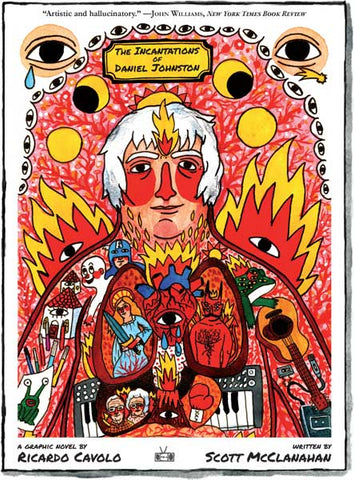 QUICK VIEW
The Incantations of Daniel Johnston
QUICK VIEW
The Incantations of Daniel Johnston
a graphic novel by
Ricardo Cavolo & Scott McClanahan
"Something wholly unexpected, grotesque, and poignant."
—The FADER
Renowned artist Ricardo Cavolo and Scott McClanahan combine talents in a dazzling, eye-popping biography of musician and artist Daniel Johnston. 
The Incantations of Daniel Johnston
a graphic novel by
Ricardo Cavolo & Scott McClanahan
$ 16.99$ 17.50Sorry! This is being reordered and will be back in stock soon.
View full product details →"[The Incantations of Daniel Johnston] captures Johnston's visions—both artistic and hallucinatory—in an intensely colorful cartoonish style and vivid recurring images: frogs, cascades of pills, volcanoes, eyeballs of many varieties."
—John Williams, New York Times Book ReviewThe Incantations of Daniel Johnston is a spirited, eye-popping collaborationg between New York Times-bestselling Spanish artist Ricardo Cavolo and award-winning author Scott McClanahan.
Long a fan of Daniel Johnston, the man and his music, Cavolo illustrates Johnston's colorful life, from his humble beginnings as a carnival employee to folk musician in Austin, to his rise to MTV popularity and persistent struggle with personal demons.
In addition to being visually very striking, with astoundingly economical prose McClanahan manages to deal with powerful and complex issues, such as how we as a society mythologize troubled artists, while continuing his ongoing exploration of human relationships, and the pliable interaction between reader and writer. -
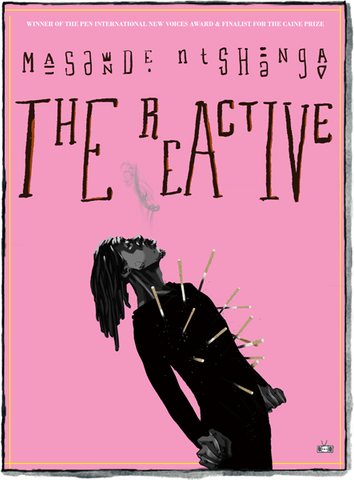 QUICK VIEW
The Reactive
QUICK VIEW
The Reactive
a novel by
Masande Ntshanga
A Best Book of 2016
"A searing, gorgeously written account of life, love, illness, and death in South Africa."
—Poets & Writers
Heralded in the author's native South Africa as "the hottest novel of the year," The Reactive is a clear-eyed and compassionate depiction of a young HIV+ man grappling with the sudden death of his younger brother. 
-
 QUICK VIEW
Not Dark Yet
QUICK VIEW
Not Dark Yet
a novel by
Berit Ellingsen
A Best Book of 2015
"[Ellingsen] is just starting what promises to be a major career, but already giving readers a unique and fascinating perspective."
—Jeff VanderMeer
A rich character-driven drama, addressing questions of personal morals and societal ethics, set on the cusp of a self-inflicted apocalypse. 
Not Dark Yet
a novel by
Berit Ellingsen
$ 8.99View full product details →$ 9.99*Favorite books of 2015 —Electric Literature
"Fascinating, surreal, gorgeously written, and like nothing you’ve ever read before, Not Dark Yet is the book we all need to read right now. It is art about science, climate change, and activism, and it vitally explores how we as people deal with a world that is transforming in terrifying ways."
—BuzzFeedBrandon leaves his boyfriend in the city for a quiet life in the mountains after an affair with a professor ends with Brandon being forced to kill a research animal. It is a violent, unfortunate episode that conjures memories from his military background.
In the mountains, his new neighbors are using the increased temperatures to stage an ambitious agricultural project in an effort to combat globally heightened food prices and shortages. Brandon gets swept along with their optimism, while simultaneously applying to a new astronaut training program. However, he learns that these changes—internal, external—are irreversible.
A sublime love story coupled with the universal struggle for personal understanding, Not Dark Yet is an informed novel of consequences with an ever-tightening emotional grip on the reader. -
 QUICK VIEW
The Glacier
QUICK VIEW
The Glacier
a novel by
Jeff Wood
"One of the most indelible and visionary movies you've ever seen." —Jon Raymond
A brilliant and visceral cinematic novel about authenticity and the American condition. 
The Glacier
a novel by
Jeff Wood
$ 8.99View full product details →$ 9.99The Glacier is a spellbinding work in the spirit of Tarkovsky or Jodorowsky that reimagines the American frontier at the turn of the millennium, a time when suburban development was metastasizing and the Social was about to implode. Following a caterer at a convention center, a surveyor residing in a storage unit, and the masses lining up for an Event on the horizon, The Glacier is a poetic rendering of the pre-apocalypse and a requiem for the passing of one world into another.
-
 QUICK VIEW
Ancient Oceans of Central Kentucky
QUICK VIEW
Ancient Oceans of Central Kentucky
a novel by
David Connerley Nahm
A Best Book of 2014
"It's impossible to stop reading until you've gone through each beautiful line." —NPR
A mysterious, lyric exploration of childhood, loss, and ghost stories. 
Ancient Oceans of Central Kentucky
a novel by
David Connerley Nahm
$ 8.99View full product details →$ 9.99(ALL AUTHOR PROCEEDS, MATCHED BY TWO DOLLAR RADIO, WILL BE DONATED TO IRC).
*One of the Best Books of 2014 —NPR, Flavorwire
*A Top-10 Independently-Published Title Overlooked by the National Book Foundation —Electric LiteratureLeah’s little brother, Jacob, disappeared when the pair were younger, a tragedy that haunts her still. When a grown man arrives at the non-profit Leah directs claiming to be Jacob, she is wrenched back to her childhood, an iridescent tableau of family joy and strife, swimming at the lake, sneaking candy, late-night fears and the stories told to quell them.
Ancient Oceans of Central Kentucky is a wrecking-ball of a novel that attempts to give meaning and poetry to everything that comprises small-town life in central Kentucky. Listen: they are the ghost stories that children tell one another, the litter that skirts the gulley, the lines at department stores. A gorgeous, haunting, prismatic jewel of a book.
-
 QUICK VIEW
Frequencies Volume 4
QUICK VIEW
Frequencies Volume 4
a collection of essays by
Colin Asher, Nathan Knapp, Joshua Mohr, & more!
"It's like The Believer just up and said 'fuck it.'" —Brooklyn Based
Coming of age in the heady days of dial-up, family strife, plus a satirical interview with Shia LaBeouf. 
Frequencies Volume 4
a collection of essays by
Colin Asher, Nathan Knapp, Joshua Mohr, & more!
$ 7.50View full product details →$ 10.00 -
 QUICK VIEW
Made to Break
QUICK VIEW
Made to Break
a novel by
D. Foy
A Best Book of 2014
"Reads like what we’d imagine a Stanley Kubrick rewrite of a script by Denis Johnson might look like." —Flavorwire
A melancholic and savage look at friendship. 
Made to Break
a novel by
D. Foy
$ 8.99View full product details →$ 9.99*One of the best books of 2014 —Flavorwire, Entropy Magazine
"Made to Break, D. Foy’s debut novel, snaps. Literary, cinematic... [Foy] is a writing school of one, and Made to Break ushers his literary energies into categorical existence."
—The Daily BeastTwo days before New Years, a pack of five friends—three men and two women—head to a remote cabin near Lake Tahoe to celebrate the holidays. They’ve been buddies forever, banded together by scrapes and squalor, their relationships defined by these wild times.
After a car accident leaves one friend sick and dying, and severe weather traps them at the cabin, there is nowhere to go, forcing them to finally and ultimately take stock and confront their past transgressions, considering what they mean to one another and themselves.
With some of the most luminous and purple prose flexed in recent memory, D. Foy is an incendiary new voice and Made to Break, a grand, episodic debut, redolent of the stark conscience of Denis Johnson and the spellbinding vision of Roberto Bolaño.
-
 QUICK VIEW
Frequencies Volume 3
QUICK VIEW
Frequencies Volume 3
a collection of essays by
Antonia Crane, D. Foy, Lawrence Shainberg,
& more!
"The world needs more endeavors like this." —Flavorwire
Find out who taught Ernest Hemingway to thumb-wrestle, and more! 
Frequencies Volume 3
a collection of essays by
Antonia Crane, D. Foy, Lawrence Shainberg,
& more!
$ 7.50View full product details →$ 10.00 -
 QUICK VIEW
Mira Corpora
QUICK VIEW
Mira Corpora
a novel by
Jeff Jackson
A Best Book of 2013
"A piercing howl of a book."
L.A. Times Book Prize Finalist
—Slate
A story of redemption in the face of nightmarish odds. 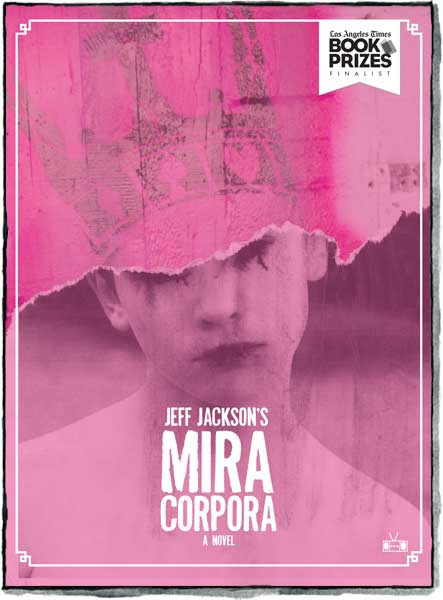
-
 QUICK VIEW
Frequencies Volume 2
QUICK VIEW
Frequencies Volume 2
a collection of essays by
Sara Finnerty, Roxane Gay, Kate Zambreno, & more!
"Some of the smartest essays." —Flavorwire
Essays on issues of belonging in Black America, gay sex tourism in Thailand, Barbara Loden, and more! 
Frequencies Volume 2
a collection of essays by
Sara Finnerty, Roxane Gay, Kate Zambreno, & more!
$ 7.50View full product details →$ 10.00 -
 QUICK VIEW
Frequencies Volume 1
QUICK VIEW
Frequencies Volume 1
a collection of essays by
Blake Butler, Joshua Cohen, Tracy Rose Keaton, & more!
"Heavy with literary weight."
—New Pages
The first installment of our journal of artful essays. 
Frequencies Volume 1
a collection of essays by
Blake Butler, Joshua Cohen, Tracy Rose Keaton, & more!
$ 7.50View full product details →$ 10.00 -
 QUICK VIEW
Radio Iris
QUICK VIEW
Radio Iris
a novel by
Anne-Marie Kinney
"'The Office' as scripted
by Kafka."
—Minneapolis Star-Tribune
Deals with watercooler culture in an artful and existential way, delivering an eerie allegory of our modern recession. 
Radio Iris
a novel by
Anne-Marie Kinney
$ 8.99View full product details →$ 9.99“Radio Iris has a lovely, eerie, anxious quality to it. Iris's observations are funny, and the story has a dramatic otherworldly payoff that is unexpected and triumphant.”
—Deb Olin Unferth, New York Times Book Review, Editors' ChoiceRadio Iris is the story of Iris Finch, a socially awkward daydreamer with a job as the receptionist/personal assistant to an eccentric and increasingly absent businessman. When Iris is not sitting behind her desk waiting for the phone to ring, she makes occasional stabs at connection with the earth and the people around her through careful observation and insomniac daydreams, always more watcher than participant as she shuttles between her one-bedroom apartment and the office she inhabits so completely, yet has never quite understood.
Her world cracks open with the discovery of “the man next door.” Over the next few weeks or months (the passage of time is iffy for Iris), she takes it upon herself to learn everything she can about this stranger. But the closer she gets to him, the more troubling questions at the heart of her own life rise to the surface, questions like—Why does she keep having the same dream? Why is it that she and her brother don’t seem to have a single shared memory of their childhood? What is it her boss actually does? In the end, Iris is faced with a choice she never imagined, and a reality she never knew enough to dread. -
 QUICK VIEW
I'm Trying to Reach You
QUICK VIEW
I'm Trying to Reach You
a novel by
Barbara Browning
A Best Book of 2012
The Believer Book Award Finalist.
First Michael Jackson, then Pina Bausch. Is someone killing famous dancers? A witty and seductive mystery. 
I'm Trying to Reach You
a novel by
Barbara Browning
$ 8.99View full product details →$ 9.99*The Believer Book Award Finalist
* Winner of the 2013 IPPY Award for GAY/LESBIAN/BI/TRANS FICTION“I was in Zagreb the day that Michael Jackson died. When I heard the news, the first thing I thought was, That’s it. That’s the first line of my novel. ‘I was in Zagreb the day that Michael Jackson died.’”
First Michael Jackson, then Pina Bausch. Next is Merce Cunningham.
Gray Adams, a former dancer with the Royal Swiss Ballet at work on his dissertation at NYU, has a theory spurred by countless hours of YouTube-based procrastination: Someone is killing these famous dancers! (And he may bear an uncanny resemblance to Jimmy Stewart, circa Vertigo.)
I’m Trying to Reach You is a moving and candid contemporary look at how we process grief, as well as how we love and communicate with one another.
-
 QUICK VIEW
Baby Geisha
QUICK VIEW
Baby Geisha
a collection of stories by
Trinie Dalton
Los Angeles Magazine Critic's Pick
"Half ingenious, and half-wily, winningly hard to pin down."
—Bookforum
Eye-popping stories that showcase an assured and stylish talent. 
-
 QUICK VIEW
The Correspondence Artist (Forthcoming)
QUICK VIEW
The Correspondence Artist (Forthcoming)
a novel by
Barbara Browning
Winner: Lambda Literary Award
"A deft look at modern life that's both witty and devastating."
—Nylon
Sure to delight fans of Chris Krause and Charlie Kaufman. Coming Soon!
The Correspondence Artist (Forthcoming)
a novel by
Barbara Browning
$ 9.99View full product details →*Lambda Literary Award Winner
In The Correspondence Artist, an unremarkable woman has been carrying on with an internationally recognized artist, largely via e-mail. To protect her paramour's identity, she creates a series of correspondent, alternative lovers in a self-destructing roman à clef.
-
 QUICK VIEW
Flats / Quake
QUICK VIEW
Flats / Quake
a novel (2 in 1!) by
Rudolph Wurlitzer
"A post-cataclysmic landscape in which heroic storytelling
has been blown to bits."
—Los Angeles Times
Two classic novels in one "69ed" edition. 
-
 QUICK VIEW
Nog
QUICK VIEW
Nog
a novel by
Rudolph Wurlitzer
"The Novel of Bullshit is Dead."
—Thomas Pynchon
A man adrift in the American West, armed with nothing more than his own three pencil-thin memories and an octopus in a bathysphere. 
-
 QUICK VIEW
I Smile Back
QUICK VIEW
I Smile Back
a novel by
Amy Koppelman
"Explores with ruthless honesty a woman come undone."
—Bookslut
Now a major motion picture starring Sarah Silverman and Josh Charles! 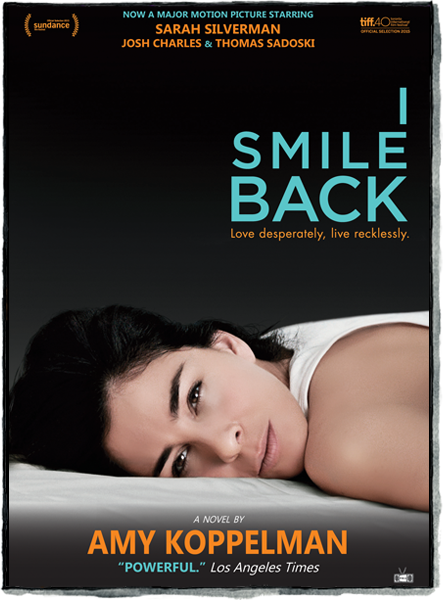
-
 QUICK VIEW
Backlist Bangers
QUICK VIEW
Backlist Bangers
Choose 12 select backlist titles for $100!
For many backlist titles, after the initial enthusiasm and support, we're left with copies. Rather than sitting in boxes, we want the books out in the world, being discovered, shared, and enjoyed by readers! Rather than sitting in boxes in storage, we want the books out there in the world, being discovered, shared, and enjoyed by readers! 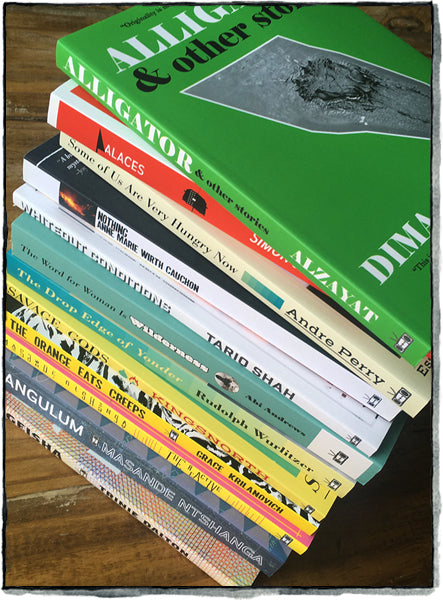



























































































































































Be the first to know! Click to visit the Newsletters page to sign up for the Two Dollar Radio newsletters.
Hi there!

Latest posts
-
Q+A with Brenda Iijima about Shelter Is Necessary for Existence
In October 2026, we are proud to be publishing Brenda Iijima's second novel, Shelter Is Necessary for Existence, a work of social satire wrapped in the patina of a psychological thriller. Narrated by the matriarch of an affluent family in... Read more →
-
Q+A with Nora Lange about Day Care
In September 2024, we released Us Fools, the debut novel by Nora Lange, which went on to be a Los Angeles Times bestseller, a best book of the year at The Boston Globe and NPR, and win the Sue Kaufman Prize... Read more →
-
Zachary Pace in Columbus, Ohio
Introduction by Brett Gregory: Zachary Pace is the author of I Sing to Use the Waiting: A Collection of Essays about the Women Singers Who've Made Me Who I Am. This book is special. It's accessible and informative, yes, but it's... Read more →